
What happens when a writer takes real newspaper headlines about a virus, adds a few hurricanes, and imagines what might happen to the island she calls home?
Well, you end up with a story that feels a little too close to reality.
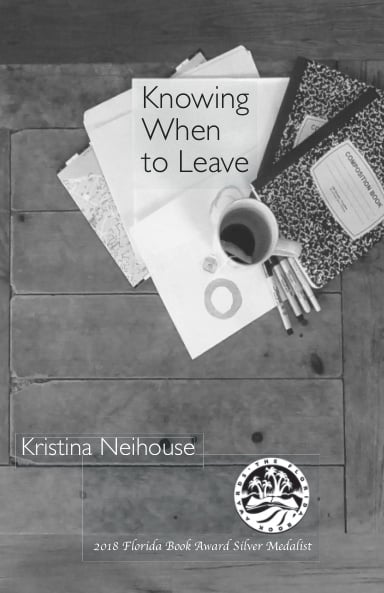
That’s exactly what happened when Kristina Neihouse sat down to write Knowing When to Leave, the first book in a trilogy that begins in Key West.
I recently had the chance to chat with Kristina for the Fun in Key West Book Club, and what started as a conversation about her book turned into something much bigger.
We talked about the Key West of the 1990s, what it was really like to experience Hurricane Irma, the surprising places she’s taught creative writing, and why she eventually decided to leave the island after more than 30 years.
And yes, we talked about cats. And a werewolf. But we’ll get to those.
Watch our conversation with Kristina Neihouse:
Prefer to listen? Here’s the podcast episode:
A Pickup Truck, a Cold Maine Summer, and a Move to Key West
Sometimes the best adventures begin with a plan that isn’t really much of a plan at all.
For Kristina, it started in Maine in 1994.
She was dating a guy named Andy, and when a cold snap arrived that August, she’d had enough of the chilly weather.
Meanwhile, Andy’s brother had heard about people living in their vans on the beach in Key West.
Now, Kristina and Andy weren’t particularly interested in living in a van, but Key West? That sounded pretty good.
So, at the end of December, they loaded up what Kristina described as a Clampett-style pickup truck and headed south.
Neither had ever been to Key West.
Their first home was a campsite at Lazy Lakes, around mile marker 19.5. They rode their bicycles into town, although their first attempt ended around mile marker 11 when Kristina decided she’d had enough.
And her first impression of Key West?
It was too bright!
She actually remembers sitting outside the old Kmart wondering whether she could live somewhere with so much sunshine.
It wasn’t until they rode through the tree-lined streets of Old Town that she started to think she might be able to make it work.
Their original plan was to stay six months.
Then they rented an apartment on Petronia Street for $450 a month.
Yes, you read that correctly. Four hundred and fifty dollars!
They signed a one-year lease, and somewhere along the way, six months became a year. Then another year. And another.
It took five or six years before they finally admitted they were probably staying.
And stay they did, for more than three decades.
Remember When Key West Was a Little Different?
One of my favorite parts of our conversation was hearing Kristina describe the Key West she remembers from those early years.
If you’ve been visiting the island for decades, you’ll probably recognize a few things.
Remember when Sunset Key was called Tank Island?
Or when you could pick up a copy of the Key West Citizen for a quarter?
Kristina remembers when the Green Parrot operated on a cash-only basis, Stock Island was a whole lot grittier, and living aboard a sailboat was a way of life for plenty of people.
In fact, she and Andy spent part of their Key West years living on a sailboat.
At one point, competing water taxi services would take boat residents back and forth to shore for about $2 a ride.
Can you imagine?
We also got talking about the Green Parrot, which happens to be one of my favorite Key West bars.
Kristina remembers seeing bands there that would have cost $20 or $30 to hear in other cities.
Those are the Key West stories I love. Little snapshots of island life that remind us how much the place has changed, and how much of its personality is still tucked away in its corners.
How Zika Headlines Became Knowing When to Leave
Now, let’s talk about the book.
Back in 2016, Zika was making headlines.
Kristina was working at what was then Florida Keys Community College, now the College of the Florida Keys, and regularly reading the local newspapers.
She noticed that the headlines about the virus were becoming more alarming.
Reports of new cases. Concerns about pregnant women. Questions about what might happen next.
And then the writer in her began asking a different kind of question.
What if the changes caused by the virus weren’t necessarily defects? What if they were adaptations that might help someone survive in an entirely different world?
That’s where the idea began.
Kristina went back through newspaper archives, collecting headlines from the Key West Citizen and the Miami Herald.
Here’s the really interesting part.
The newspaper headlines in Knowing When to Leave are real.
She changed the names of the newspapers and replaced Zika with her fictional virus, Omeg, but the headlines themselves came from actual reporting.
She then built her fictional story around those real-world events.
I love that detail because it gives readers something extra to think about. These weren’t simply frightening headlines Kristina invented. They were things people were actually reading in 2016.
Of course, she eventually ran into a problem.
There wasn’t quite enough happening in Key West to create the level of drama she wanted.
Her solution?
Throw in some hurricanes!
And not just any hurricanes.
She drew from real storms, including Katrina, Sandy and Wilma, incorporating elements of those events into her fictional world.
Because apparently one mysterious virus wasn’t quite enough excitement for the Florida Keys.
Writing a Novel in 30 Days
Here’s something else that surprised me.
Kristina wrote the first draft of Knowing When to Leave in just 30 days.
She participated in National Novel Writing Month, often called NaNoWriMo, in November 2016.
The challenge was to write a 50,000-word draft of a novel in one month.
And she did it.
Now, before you start thinking she sat down for 30 days and magically produced a finished novel, there’s a little more to the story.
That first draft was very different from the book we can read today.
The hurricanes weren’t added until months later, and much of the second half changed as she worked through the story.
She also made an interesting choice by telling much of the story through the journal of Josie, a high school senior.
Where did that voice come from?
Kristina thinks it may have come from hearing teenage girls chatting while she was getting ready for work after her morning swim at the college.
Those conversations stuck with her.
And eventually, Josie began to take shape.
The characters developed through revision after revision, sometimes surprising even their creator.
Kristina, a lifelong cat person, was particularly surprised when Josie ended up with dogs instead of cats.
Sometimes fictional characters apparently have minds of their own.
A Book About Disaster Before the COVID Pandemic
Knowing When to Leave was published in 2018.
Two years later, the world experienced the COVID-19 pandemic.
Naturally, I had to ask Kristina what it felt like to watch a real pandemic unfold after writing a fictional story about a frightening virus.
Her answer wasn’t what I expected.
She didn’t really see the two as especially similar.
After all, her fictional virus was inspired by Zika, a mosquito-borne illness, and the circumstances of her story were very different from COVID.
Readers, however, noticed the connection.
People who discovered her book in 2021 sometimes wondered how she’d managed to write about such events years earlier.
Of course, she hadn’t predicted the future.
She’d simply taken real concerns from her own time and imagined what might happen if events unfolded differently.
And that’s part of what makes fiction so interesting.
A writer can start with something familiar, ask one little question, and suddenly we’re looking at the world from an entirely different perspective.
Hurricane Irma Changed the Story, Too
While Kristina was working through revisions of her novel, Hurricane Irma arrived in September 2017.
She and Andy were living in a small house on Fleming Street, across from the public library.
They decided to stay in Key West during the storm.
Kristina had experienced hurricanes before, but this was a different experience for her.
During Hurricane Georges in 1998, she and Andy had evacuated by sailboat to Punta Gorda.
During Irma, she was there to experience the storm and its aftermath firsthand.
And as frightening and devastating as it was, the writer in her was paying attention.
She took notes about what she saw and felt, later incorporating those details into the book.
One of the most memorable stories she shared was about the landline telephone in their house.
After Irma, cell service was largely unavailable, but their landline still worked.
At one point, people were lined up outside the house, waiting to use the phone.
Some needed to tell their families they were safe. Others needed to check on loved ones or contact property owners.
Just imagine how important that working telephone was in those days after the storm.
It’s a small detail, but it says so much about the community that exists beyond the bars, restaurants and sunsets.
It’s also a reminder that hurricanes don’t end when the wind stops blowing.
Key West Isn’t Just the Setting. It’s Part of the Story.
When I asked Kristina whether Knowing When to Leave could have taken place anywhere else, her answer was pretty simple.
Key West was what she knew.
She had lived there for more than 20 years when she wrote the book, and that experience informed the streets, buildings, people and little details that make the story feel authentic.
There’s White Street Pier. There’s Fausto’s. And there’s even a map of fruit trees around the island that plays a part in the story.
Kristina explained that those fruit trees were real, including a breadfruit tree near Cubano’s Hardware.
I love those details.
When you’ve spent time in Key West, you can read a scene and almost picture yourself walking down the street.
You recognize a corner. You remember a building. You know what should be waiting around the next turn.
And then Kristina changes something.
Suddenly, you’re imagining the familiar island after a disaster, and it makes the story that much more powerful.
If you enjoy books that are deeply connected to Key West, this is one worth adding to your list.
Why Kristina Spent Her Saturday Nights in Jail
Now here’s a story I wasn’t expecting when I started researching Kristina.
For years, she spent her Saturday evenings at the Monroe County Detention Center.
Not as an inmate!
As a volunteer.
Kristina became involved in a program called Stepping Out in 2008, which helped incarcerated women develop life skills.
Eventually, her friend Candace Whitaker started a writing program called Write On.
They brought composition notebooks, small pencils, writing prompts and sometimes books into the detention center.
The idea was simple.
Give the women an opportunity to put their thoughts on paper.
Sometimes that meant writing about anger. Sometimes it meant writing a letter they would never send. Sometimes it was simply an opportunity to express something they couldn’t easily say aloud.
And no one was required to share what they wrote.
I found this part of our conversation especially meaningful.
We often think of writing as something authors do to entertain or inform other people.
But sometimes writing is simply a way to work through what’s happening in our own lives.
Kristina said one of the things she misses most about Key West is volunteering with the women at the detention center.
That says quite a bit about how important the experience was to her.
A Lifelong Love of Books, With a Few Challenges
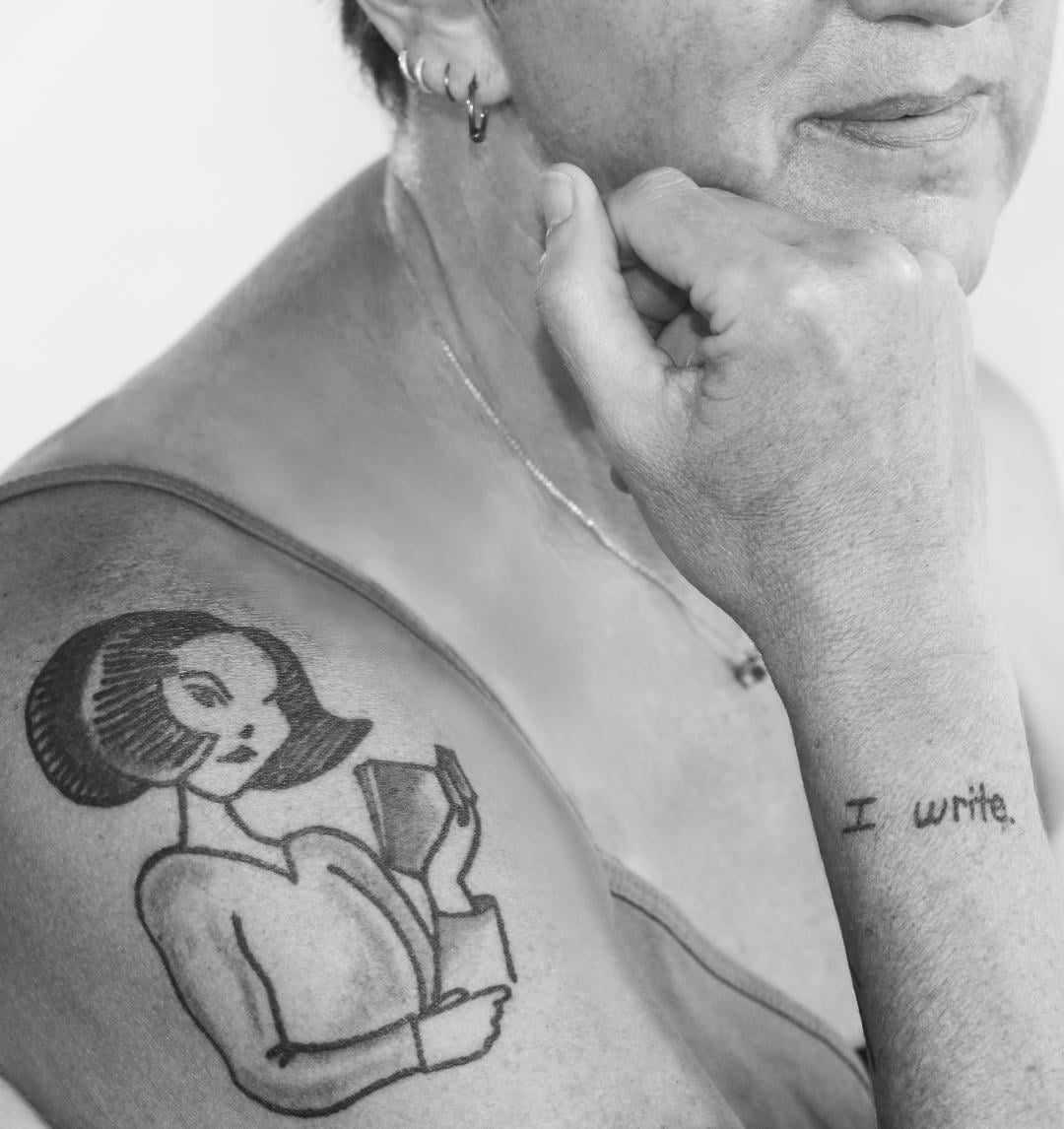
Kristina has spent much of her professional life surrounded by books.
She’s worked in libraries, including the public library in Key West, and at Key West Island Books.
But something readers might not know is that she also lives with a significant visual impairment.
She’s never driven a car, although she explained that this wasn’t a problem when she lived in Key West because she could ride her bicycle nearly everywhere.
Reading a traditional printed book, however, isn’t always easy.
She uses magnification tools on her computer and prefers e-books, where she can enlarge the text.
She also had a rather practical request for publishers, especially those publishing poetry.
Could we please stop printing everything in such tiny type?
After all, if a short poem occupies only a small portion of the page, why not make the words a little bigger?
It’s a fair question!
And one more reminder that the books we love should be accessible to as many readers as possible.
Sometimes Knowing When to Leave Means Leaving Key West
Of course, I couldn’t let Kristina get away without asking about the title of her novel.
Because here’s the interesting thing.
She wrote Knowing When to Leave at a time when she was convinced she would never leave Key West.
In many ways, she described that first book as a love story to the island.
Yet after more than 30 years, Kristina and Andy eventually made the decision to move back to Maine.
They had considered leaving before, but the timing hadn’t felt right.
Eventually, that changed.
Their circumstances had changed, too. They had lost the Old Town house they’d lived in, spent time living on Stock Island, and had long considered retiring in Maine.
Now they’re settling into a new chapter.
There’s a garden, time with family, part-time work, and plenty of writing still to do.
And when I asked what she would tell someone who was trying to decide whether to stay somewhere or begin again, her answer was wonderfully simple.
“You’ll know.”
She explained that there had been earlier moments when she and Andy considered leaving, but she simply wasn’t ready.
Then one day, they both realized it was time.
Not because Key West was no longer special.
Not because those 30 years didn’t matter.
But because sometimes a new chapter begins when you’re finally ready to turn the page.
I thought that was a pretty perfect way to bring our conversation back to the title of her book.
What’s Next for Kristina Neihouse?
Kristina certainly isn’t finished writing.
In fact, she’s working on a new novel inspired partly by memories of growing up in Maine.
But don’t expect a straightforward memoir.
Her main character is a 13-year-old girl who happens to be a werewolf.
And her best friend?
A witch.
Kristina explained that adding the supernatural elements gives her a way to explore familiar experiences without making the story too autobiographical.
She’s also been publishing shorter fiction.
Her flash fiction piece The Company of Cats appeared in the online literary journal Thin Skin, and another story, The Line, inspired by her volunteer experiences at the detention center, was scheduled for publication in The Hooghly Review.
She also recently won the creative nonfiction category of the Topsham Public Library’s Joy of the Pen writing competition.
And she isn’t afraid to admit that the writing journey comes with its share of rejection.
At one point, she submitted work for more than 20 opportunities and was rejected every time.
But she kept writing.
Which, when you think about it, might be another kind of knowing when to stay.
Kristina’s Key West Favorites
Before we wrapped up, I couldn’t resist a few rapid-fire Key West questions.
After all, someone who spent more than 30 years on the island has to have a few favorite places!
Here are some of her picks.
- Favorite breakfast: Harpoon Harry’s, where she orders a spinach and feta omelet with tomatoes.
- Favorite coffee: A café con leche with just one sugar. Five Brothers is one spot she mentioned.
- Favorite happy hour: The Green Parrot. I completely agree with her on this one!
- Favorite time of day: Those quiet, early Key West mornings when the island feels like it belongs to you.
- Favorite bookstore memories: Her years at Key West Island Books, including one unforgettable encounter with local writer Bud Navarro.
And speaking of Key West Island Books, it’s one of my favorite places to send readers who love stories connected to the island.
Suzanne has a section devoted to our Fun in Key West Book Club selections, and you can often find our current and past picks there.
Where to Find Knowing When to Leave
If this conversation has you curious about Kristina’s writing, Knowing When to Leave is a great place to start.
It’s the first book in a trilogy, so don’t expect everything to be wrapped up at the end.
And a little heads-up from Kristina: although the first book won a silver medal in the young adult category of the Florida Book Awards, the second book moves into more adult territory.
You can find Kristina and her books through:
- Kristina’s website: kanwrites.com
- Online book orders: Lulu
- In Key West: Key West Island Books, which also offers shipping.
- More of her writing: The Company of Cats
And of course, you can watch or listen to our complete conversation at the top of this article.
Join Us for More Key West Stories
One of the reasons I love hosting the Fun in Key West Book Club is that we get to discover so much more than what’s printed on the pages.
We get to meet the people who write these stories, hear about the experiences that shaped them, and sometimes discover a little something about ourselves along the way.
Our Book Club is free, and you don’t have to live in Key West to join us.
We read books connected to the island, meet authors, and share stories about the places and people that make the Florida Keys so interesting.
And if you love the mysterious side of the island, be sure to explore some of my favorite Key West ghost tours. There are plenty of fascinating stories waiting around those old streets after dark.
Now, I’m curious.
Have you ever had a moment when you realized it was time to make a change, even if you loved the place or life you were leaving behind?
I’d love to hear your story.
Because sometimes, as Kristina reminded me, you’ll know when it’s time.