Welcome to another deep dive into island history! Grab your sunscreen, your curiosity, and maybe a splash of rum—because today we’re heading back to the 1860s.
We usually think of Key West as the ultimate vacation spot (because, let’s be honest, it is). We picture sunsets at Mallory Square, frozen drinks on Duval, and chickens roaming the streets like they own the place. But if we rewind the clock, Key West wasn’t a party town. It was a military powerhouse.
Today, we’re digging into the Civil War Union Blockade. I know, “blockade” sounds like a dry history term from middle school social studies, but trust me—this story has everything. We’re talking speedy ships, British investors looking for a payout, “essential” brandy shipments, and sneaky night runs from Nassau and Havana.
It’s a total maritime drama, and it happened right in our backyard.
Setting the Stage: Secession & Strategy
Let’s set the scene. It’s 1861. Seven Southern states have seceded from the Union, sparking the Civil War. The Confederacy is formed, and they have one major economic ace up their sleeve: King Cotton.
The South’s entire economy relied on trading cotton with the rest of the world. President Lincoln looked at the map and realized something crucial: if he could cut off the South’s ability to trade, he could strangle their economy and shorten the war.
Lincoln’s plan was simple but ambitious. He ordered a massive naval blockade covering about 3,500 miles of Confederate coastline and 12 major Southern ports. The goal? No cotton gets out. No weapons, medicine, or supplies get in.
It was a total lockdown intended to starve the Confederate war machine. But to pull off a blockade that big, the Union needed a perfect base of operations.
Enter Key West: The Perfect Strategic Position
So, where does Ke West fit into this massive war strategy?
Geographically, Key West was the ultimate strategic weapon. It sits right at the entrance to the Gulf of Mexico, boasting a deep-water port capable of handling heavy naval traffic. It was a natural choke point for any ship trying to slip supplies into the Confederacy.
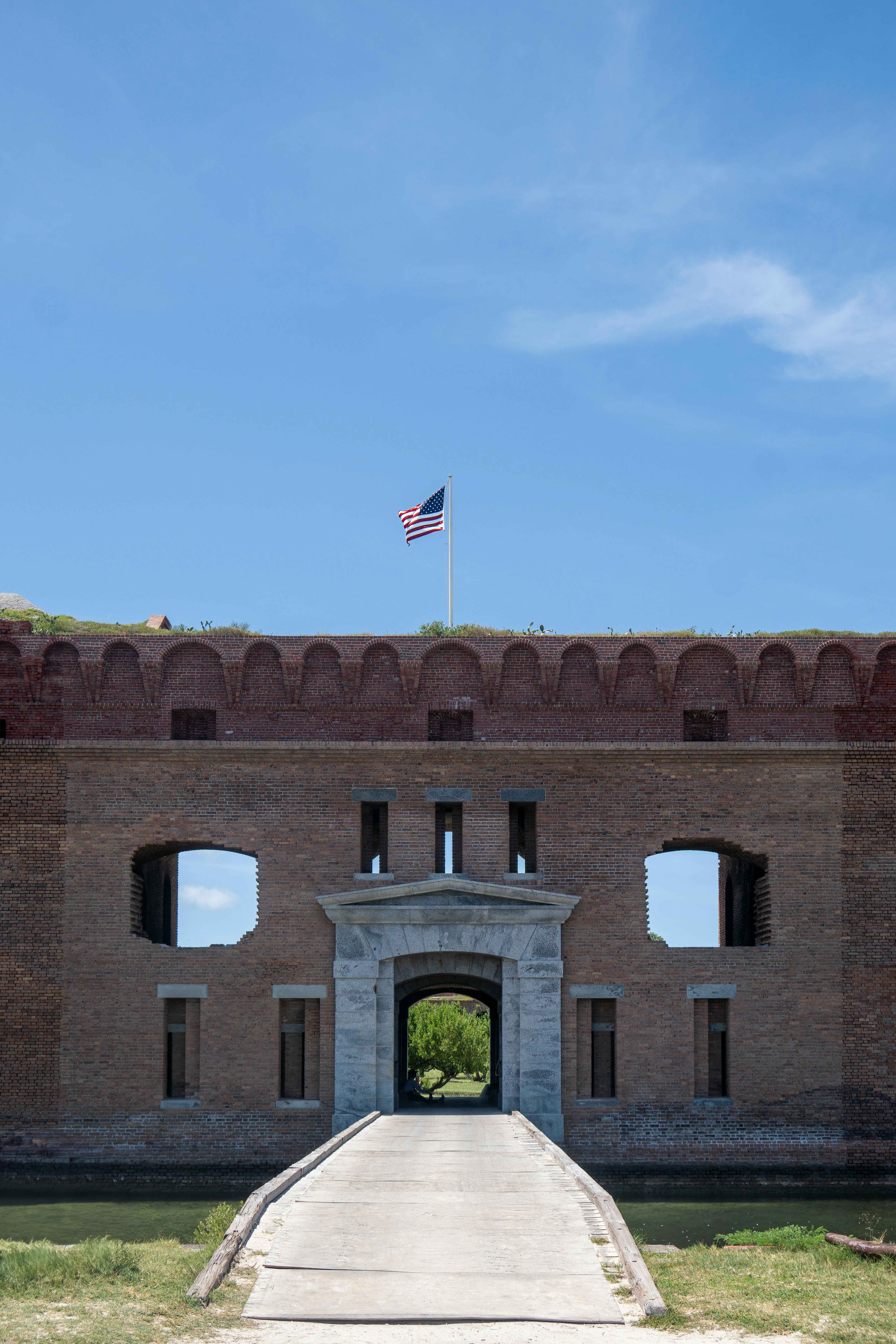
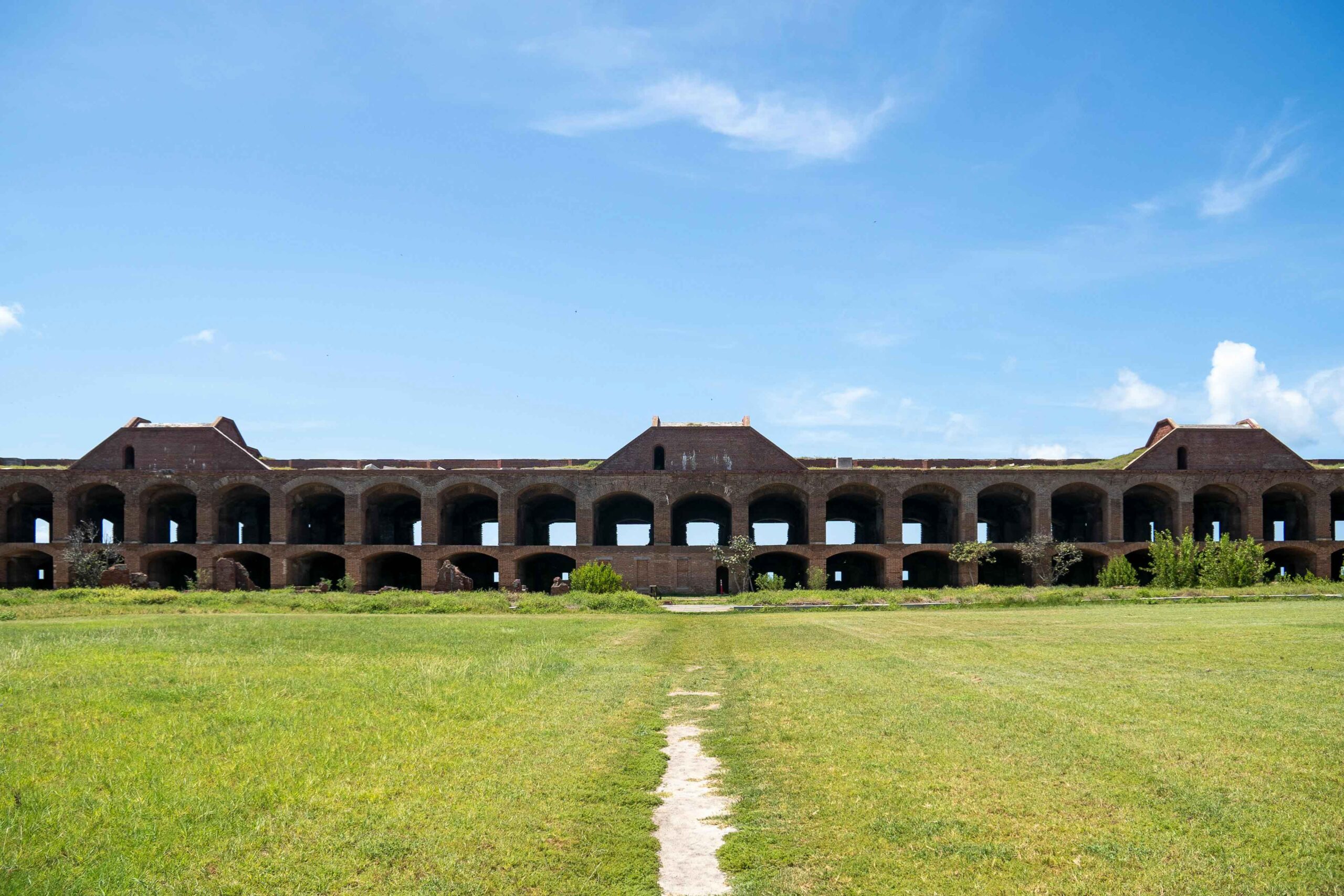
The U.S. Navy established the East Gulf Blockading Squadron in Key West. They set up operations at Fort Zachary Taylor, the massive Fort Jefferson out in the Dry Tortugas, and the Port of Key West itself.
Their patrol zone was huge—spanning from Cape Canaveral all the way around to Pensacola. Between 1861 and 1865, this squadron intercepted over 300 ships. Many historians believe Key West’s role was absolutely vital in shortening the Civil War because it effectively severed the South’s supply lines.
The Blockade’s Massive Impact
The numbers behind this operation are staggering. During the war years, the Union Navy grew significantly, commissioning around 500 ships to tighten the net.
The results spoke for themselves:
- Over 1,500 blockade-runner ships were captured or sunk during the war.
- Southern cotton exports dropped by a massive 95%.
- The Confederate supply chain was severely weakened.
Now, here is a surprising fact that usually stumps people: Five out of six ships that actually tried to run the blockade made it through.
Wait, what? If most ships made it through, was the blockade a failure?
Not at all. The real success wasn’t just about catching the runners; it was about the fear factor. The blockade scared off thousands of merchant ships that never even attempted the journey. Regular trade completely evaporated because the risk was just too high.
The Rise of the Blockade-Running Industry
Because normal trade ships were too slow and visible to get past the Union Navy, a new, high-stakes industry popped up: Blockade Running.
This was a short-lived but booming specialty business. The standard sailing ships of the time were sitting ducks. So, shipbuilders got creative. They developed a new design specifically for sneaking past the Union fleet:
- Small and lightweight: To move fast and turn quickly.
- Shallow draft: To hug the coastlines where deep-hull Navy ships couldn’t follow.
- Low profile: To stay hidden against the horizon.
- Steam-powered paddle wheels: Built for raw speed, not cargo capacity.
Because these ships were small, they couldn’t carry heavy bulk items. This meant the South couldn’t smuggle in the heavy iron and artillery they desperately needed to fight the war.
Instead, the cargo had to be light and high-value. We’re talking rifles, medicine, turpentine… and luxury goods.
My favorite part? The manifests often listed “tobacco and brandy” as essential war supplies. I guess if you’re losing a war, brandy becomes pretty essential, right?
The British Connection
Here is where the plot thickens. Who was funding all these high-speed, sneaky ships? The British.
When the blockade was enacted, maritime law kicked in, which technically gave the Confederacy status as a sovereign nation in the eyes of trade. This allowed Britain to trade directly with them—legally.
British investors saw a golden opportunity. They had the money, and the South had the cotton they needed for their textile mills. So, investors in England started building these specialized blockade runners. They even hired retired British naval officers and professional crews to run them.
The operation was slick. They would depart from neutral ports like Bermuda, Nassau, and Havana. They’d wait for a moonless night, make a dash into a Confederate port, drop off the rifles (and the brandy), load up with valuable cotton, and speed back out.
The profit margins were astonishing. We’re talking about a low-risk, high-reward game. If they were captured, the British crews were usually just sent home because of maritime rules.
Investors poured the equivalent of $2.5 billion (in today’s money) into this industry. It was the crypto craze of the 1860s.
A Real Story: The Ship Banshee
To give you an idea of how wild this money was, let’s look at a ship called the Banshee.
Based out of Nassau and Bermuda, the Banshee was a notorious runner. It successfully made six runs into Wilmington, North Carolina, dodging the Union Navy every time.
It was finally captured on its seventh run. A total loss, right? Wrong. By that point, the ship had already turned a 700% profit for its owners.
When the U.S. Navy seized it, they turned it into a blockading ship for their own fleet. And the British owners? They didn’t even sweat it. They basically said, “No worries, let’s just build Banshee No. 2,” and kept right on going.
Blockade Success & Confederate Collapse
Despite the slippery nature of the blockade runners, the Union strategy worked.
The blockade choked off the South’s ability to sustain itself. It strangled their economy and prevented them from importing the heavy machinery required to win a long war.
Crucially, it achieved this with very few lives lost compared to the bloody land battles happening further north. Historians agree that the blockade was a decisive factor in the Confederate defeat—and Key West was right at the nerve center of the entire operation.
Bringing It Back to Today
Next time you’re wandering around Fort Zach or taking the ferry out to the massive brick wonder that is Fort Jefferson, take a second to really look at them.
They aren’t just cool old buildings perfect for Instagram photos. They were the headquarters for one of the most important naval operations in American history. They stood guard over these turquoise waters to ensure the Union stayed together.
It adds a whole new layer to the island, doesn’t it?
Check out more of the self-guided walking tour: here
I always encourage people to stop and read those historic markers scattered around town. You might walk past one a dozen times on your way to get a slice of Key lime pie, never realizing it tells the story of spies, smugglers, and naval heroes.