

It was 1982. The hair was big, the music was synth-heavy, and down in the Florida Keys, things were getting… weird. And I don’t mean “Key West weird” (which usually involves chickens crossing the road and Hemingway look-alikes). I mean dark times were brewing.
If you’ve ever driven the Overseas Highway, you know there’s basically one way in and one way out. Now, imagine that road being a parking lot. Not just a “Friday afternoon rush hour” parking lot, but a full-blown, government-mandated stoppage.
This isn’t just a funny story about a flag with a shell on it. This is the origin story of the Conch Republic—a tale involving water balloons, stale Cuban bread, and a mayor who decided that if the US government was going to treat the Keys like a foreign country, they might as well act like one.
Grab a drink (preferably with an umbrella in it), and let’s dive into the time Key West went to war with the United States. Sort of.
The Traffic Jam From Hell
Let’s set the scene. It’s March 1982. The US Border Patrol decides to set up a roadblock at the Last Chance Saloon in Florida City. We aren’t talking about a casual checkpoint. They were stopping every single car leaving the Keys to search for drugs and undocumented immigrants.
They were looking under seats, popping open glove compartments, and checking trunks. It was thorough. It was intense. And it caused a 17-mile traffic jam.
If you think the drive from Key Largo to Key West is long now, imagine sitting in your car for hours in the sweltering Florida heat while a federal agent inspects your beach towels. It was a mess.
But here’s the kicker: The Keys were (and are) part of the United States. Yet, the government was treating everyone driving north like they were crossing an international border. Locals were confused, tourists were furious, and the vibe was quickly shifting from “vacation paradise” to “police state.”
When Tourism Evaporates, You Get Creative
This roadblock wasn’t just an inconvenience; it was an economic disaster.
Back in the early 80s, the Keys were transitioning. Sure, there was a history of fishing and, let’s be honest, a fair bit of smuggling (shoutout to Richie “Conch Boy” Gomez and his Smuggler’s Tale for the inside scoop on that era). But the islands were trying to build a legitimate tourism economy.
When news of the roadblock hit the national and international press, visitors panicked. Who wants to spend their vacation getting interrogated by Border Patrol? Tourists canceled trips in droves. Hotels stood empty. The dollars that kept the local businesses alive were evaporating into thin air.
The community leaders were terrified. Their livelihoods were on the line. Fear turned into anger, and anger turned into a resolve that only people living at the end of the road can muster. They realized they couldn’t just sit there and take it.
The Legal Battle (That Failed Miserably)
First, they tried to do things the “right” way. Mayor Dennis Wardlow and the city council didn’t go straight to revolution. They went to court.
They filed an injunction in federal court in Miami, demanding the roadblock be removed. Attorney David Paul Horran argued the case, pleading that the Keys were being treated unfairly.
The result? The judge basically shrugged. The court refused to stop the Border Patrol. The legal doors slammed shut right in their faces.
This is the moment where history pivoted. Mayor Wardlow walked out of that Miami courthouse, surrounded by a swarm of reporters asking, “What now?”
He looked at them and delivered the line that changed everything: “We’re going home to secede.”
April 23, 1982: The Birth of a Nation
He wasn’t bluffing. (Okay, he was kind of bluffing, but with style).
On April 23, 1982, right in front of City Hall, Mayor Wardlow and the community declared their independence. The logic was simple: If the US government was going to treat the Florida Keys like a foreign country with border checkpoints, then they would become one.
They raised the Conch Republic flag—a blue field with a conch shell and a rising sun. It was beautiful, but it was also a massive, hilarious middle finger to the federal government. Wardlow was named Prime Minister. It was pageantry wrapped in protest, and the world couldn’t look away.
The Battle of the Conch Republic
You can’t have a war without a battle, right?
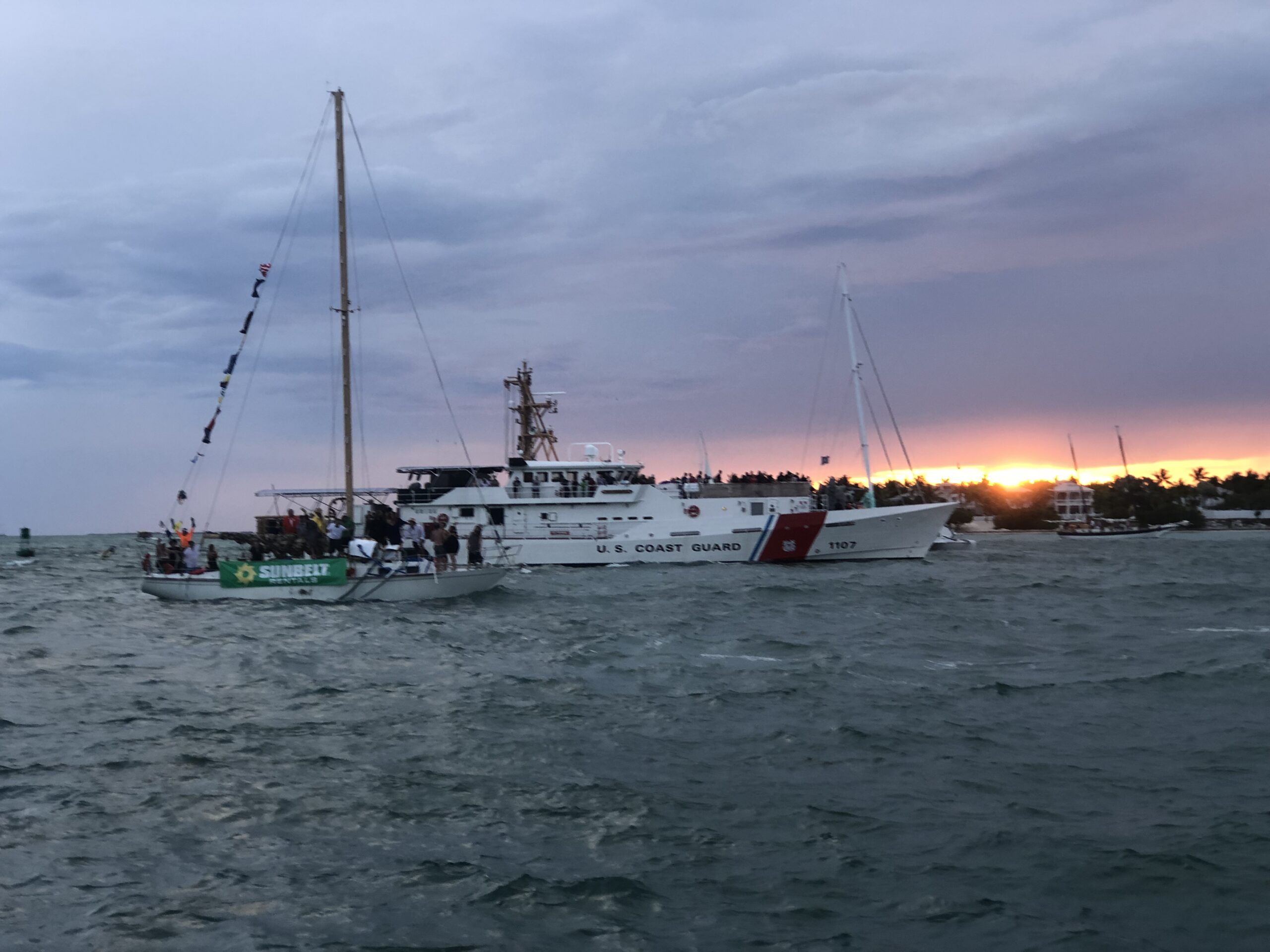
Enter the Schooner Western Union, commanded by Captain John Cross. The newly minted Conch Republic Navy set their sights on a target of opportunity: the US Coast Guard Cutter Diligence, which just happened to be in the harbor.
Now, I want to be very clear about the “weapons” used in this assault. They didn’t have cannons or muskets. They had:
- Water balloons
- Conch fritters
- Stale Cuban bread
Yes, they pelted a US military vessel with old bread.
The Coast Guard, to their credit (and probably amusement), fought back with fire hoses. It was chaotic, it was wet, and it was legendary.
Immediately after the “attack,” Prime Minister Wardlow surrendered. He officially surrendered to the US Navy, and then—in a stroke of genius—demanded one billion dollars in foreign aid and war relief to rebuild his besieged nation.
(Spoiler alert: They are still waiting on that check).
Why It Actually Worked
It sounds like a joke, doesn’t it? A bunch of locals throwing bread at a boat. But here is the thing: It worked.
The publicity was so overwhelming, and the ridicule of the federal government was so sharp, that the roadblock was quietly removed. The searches stopped. The tourists came back.
It wasn’t a violent revolution. It wasn’t anti-American. The Conch Republic never considered the Coast Guard an actual enemy. It was a protest against government overreach, fueled by humor, creativity, and a refusal to be pushed around.
They used satire to save their economy, and they won.
A Sovereign State of Mind
Today, the Conch Republic is more than just a funny story to tell at a bar (though it’s definitely that, too). It’s a sovereign state of mind.
It represents that specific Key West attitude: independence, community, and a little bit of weirdness. It’s about standing up to things that don’t make sense and doing it with a smile. When you walk around Key West today, you’ll see the flags everywhere. You’ll see the historic markers. You feel that pride.
Party Like It’s 1982: Conch Republic Days
If you want to experience the madness for yourself, you have to come down for the Independence Celebration.
Every April, the Keys celebrate the anniversary of their secession. We are heading into the 44th year of this tradition. In 2026, the party kicks off on April 17th and runs through the 26th.
We’re talking about 10 days of absolute chaos in the best way possible. There are over 30 events, including:
- The world’s longest parade (it goes from the Atlantic Ocean to the Gulf of Mexico… down Duval Street).
- Bed races.
- Arts and crafts festivals.
- The Great Sea Battle reenactment.
During the reenactment, you can stand at Mallory Square and watch the chaos unfold in the harbor. Planes drop toilet paper from the sky. Boats circle the Coast Guard cutters throwing water balloons. It’s loud, it’s messy, and it’s arguably the most fun you can have with a history lesson.
Join the Rebellion
So, next time you’re in the Keys, don’t just walk past the flag. Remember the traffic jam that started it all. Remember the stale bread that secured freedom.
The Conch Republic proves that sometimes, you don’t need a lawyer to solve a problem. Sometimes, you just need a schooner, some conch fritters, and the audacity to tell the government, “Fine, we quit.”
Come down for the festival, grab a cold drink, and soak up the spirit of independence. Just don’t expect any foreign aid checks to show up in your mailbox.