

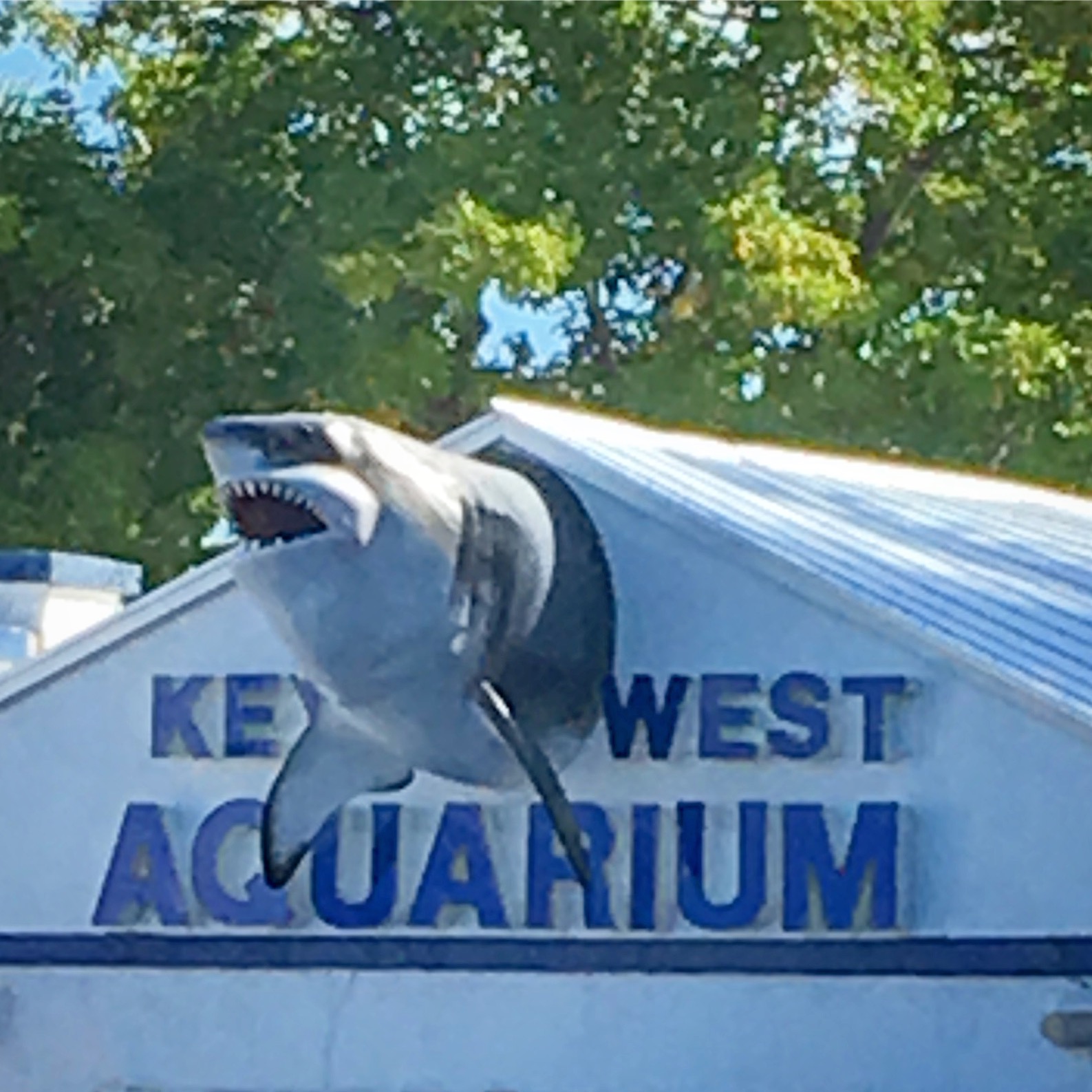
You’ve probably walked right past it. Maybe you were rushing to catch the sunset celebration at Mallory Square, or maybe you were distracted by a street performer juggling fire (it happens). But tucked right there near the Shipwreck Museum is the Key West Aquarium.
If you’ve glanced at it and thought, “Oh, just another fish tank,” let me stop you right there. You are missing out.
This isn’t just a place to stare at a grouper. This building is practically the grandfather of Key West tourism. It has survived economic collapse, massive hurricanes, and a brief stint where the government decided a shark tank was the perfect place for a gun range.
So, grab a frozen drink and let’s dive into the history of the Key West Aquarium. Trust me, it’s wilder than you think.
When Key West Was Broke (Like, Really Broke)
Let’s rewind the clock to the early 1930s. If you think the economy is tough now, Key West in the 30s was on a whole different level.
The city was broke. I’m talking “hand the keys over to the federal government” broke. The cigar industry had collapsed, the sponge industry was fading fast, and fresh water was scarce. Jobs were disappearing faster than a tourist on a Sunday morning. It was a desperate time, and desperate times call for big, weird ideas.
Enter the federal government and the WPA (Works Progress Administration). Their mission? Save Key West. And the man with the plan was Dr. Robert Van Dubus.
The Big Idea: An Open-Air Aquarium
Dr. Van Dubus was the superintendent of the Fairmont Park Aquarium in Philadelphia, but he spent enough time in Key West to know what was up. He looked at the crystal-clear waters surrounding the island and thought, “Why on earth are we not showing this off?”
His idea was revolutionary for the time: an open-air aquarium and garden.
He wanted to build it right in Key West, using local marine life. The goal wasn’t just to entertain people; it was to sell the island. He envisioned a research center and a clearinghouse for subtropical sea creatures that would put Key West on the map.
Construction started in 1932, and the locals got crafty. Since fresh water was basically liquid gold at the time, they mixed the concrete using sea water. That is some serious island resourcefulness (and probably why the place is still standing).
Opening Day: The First of Its Kind
When the doors finally swung open on February 17, 1935, it was a big deal.
The Key West Aquarium was officially the first open-air aquarium in the United States. It was also the largest of its kind in Florida. Admission was a whopping 15 cents for adults and a nickel for the kids.
Key West was ready for its comeback. They had the attraction, they had the weather, and they were ready for the tourists.
Plot Twist: The Hurricane and the Gun Range
You know how life likes to throw a curveball just when things are going well? Well, Mother Nature threw a fastball.
Seven months after the grand opening, the Labor Day hurricane of 1935 hit. It remains one of the strongest hurricanes to ever make landfall in the U.S. It destroyed the Overseas Railroad, which was the only land route to the island at the time.
No train meant no tourists. And without tourists, the aquarium’s grand plan collapsed almost overnight.
From 1935 to 1947, things got weird. The U.S. government stepped in, stripped out all the exhibits, filled in the tanks, and repurposed the building. During World War II, this beautiful open-air aquarium was used as a military gun range.
Only in Key West could a place go from “look at the pretty turtles” to “target practice” in a decade.
Getting the Roof (and the Groove) Back
After the war, the building was handed back to the city. Slowly but surely, they started breathing life back into it as an aquarium.
In the 1960s, they finally put a roof on the place. Since it was originally open-air, algae had been having a field day in the tanks (sunlight + water = green soup). The roof helped control the algae, and improved lighting made the exhibits pop.
But by the late 70s, the old girl was showing her age. The building needed some serious love. That’s when two local businessmen, Chris Belland and Ed Swift II, stepped up to the plate. They took on the massive challenge of rebuilding and expanding the aquarium from the ground up.
The 1982 Rebirth
In 1982, the modern version of the Key West Aquarium was born. It wasn’t just a roadside attraction anymore; it became the backbone of the Keys’ economy.
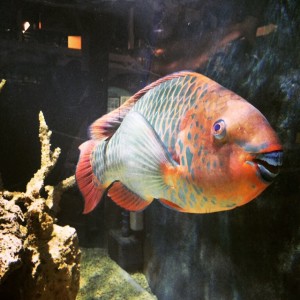
They added enhanced educational signage (so you actually know what you’re looking at), upgraded the animal habitats, and unveiled the crown jewel: the Atlantic Shores exhibit. This massive 50,000-gallon tank recreates a mangrove shoreline, giving plenty of room for sharks, tarpon, grouper, and sea turtles to do their thing. It finally fulfilled Dr. Van Dubus’s original vision.
Sharks in the Wild (Literally)
Fast forward to October 2005. Hurricane Wilma rolled through town.
The aquarium survived the storm, but the rising storm surge breached the shark tanks that faced the Gulf of Mexico. And yes, some of the sharks escaped into the wild.
Honestly, “sharks escaping into the streets of Key West during a hurricane” is probably the most Florida sentence I have ever written.
Why You Should Visit Today
So, why does any of this matter? Why should you stop in next time you’re wandering around Mallory Square?
Because the Key West Aquarium is a survivor. It represents the moment Key West shifted from surviving to storytelling. For over 90 years, it has introduced generations of people to the magic of the Florida Keys ecosystem.
Want to learn more? Buy your tickets online? Click here
(This is an affiliate link – I will earn a small commission if you purchase using my link – thank you for your support!)
Plus, the experience today is genuinely cool.
- Touch Tanks: You can get hands-on with sea stars, sea urchins, and horseshoe crabs (wash your hands before you eat that conch fritter, please).
- The Turtle Hospital: They have sea turtles with prosthetic flippers! These guys are powerful ambassadors for marine conservation.
- The 2023 Upgrade: If you haven’t been lately, check out the new entryway. It features glass doors printed with a historic 1937 photograph and wooden gates modeled after the original entrance. It perfectly bridges the past and the present.
Next time you see that historic marker, don’t just walk by. Stop in, learn a little history, and say hi to the sharks (the ones that stayed in the tank, anyway).