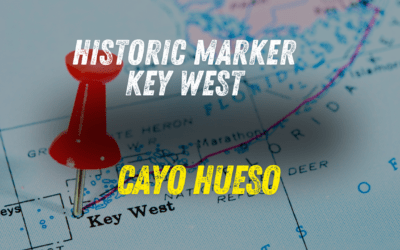


Most people come to Key West for the sunsets, the frozen drinks, and that one rooster who refuses to leave the parking lot. But buried on Duval Street—between the T-shirt shops and the happy hour signs—is a small historical marker that quietly holds 500 years of history. We’re talking Spanish ships, sea turtles, piles of bones, and one very ambitious conquistador named Juan Ponce de León.
Let’s back up.
The Ambition of Ponce de León: Chasing Land and Power
Ponce de León wasn’t exactly exploring for the love of the open sea. He was chasing land, power, and possibility—the three things that made 16th-century Spanish conquistadors get in small wooden boats and sail into the unknown (respect, honestly).
Fresh off his time as the first governor of Puerto Rico, Ponce de León set his sights on something bigger. In 1513, he led an expedition north from the Caribbean, hunting for new territory to claim in the name of the Spanish Crown. What he found instead was Florida—a land so lush and full of wildlife that he named it La Florida (literally “land of flowers”) because he arrived during the Easter season, known in Spanish as Pascua Florida.
But it wasn’t just the flowers. His route took him through a chain of islands that would eventually become some of the most famous real estate in America. You may have heard of them.
Discovering the Florida Keys and the “Atlantic Highway”
Here’s where things get genuinely interesting: Ponce de León’s crew didn’t just stumble through the Florida Keys—they accidentally discovered one of the most powerful ocean currents on the planet. The Gulf Stream.
Think of the Gulf Stream as nature’s express lane. This massive current moves warm water northeast along the Florida coast and out into the Atlantic, and once Spanish explorers figured out it existed, it basically became their fast track home to Europe. They called it the “Atlantic Highway,” and it transformed global shipping and trade routes for centuries.
Not bad for a detour through the Keys.
The Legend of Cayo Hueso: Why the Explorer Saw a Place of Mourning
So Ponce de León and his crew made their way to the island we now call Key West. Back then, it had a different name: Cayo Hueso, which translates roughly to “Island of Bones.”
Why? Because when the Spanish arrived, the shores were covered in the skeletal remains of Indigenous people—likely the result of battles between the Calusa and other tribes. The sight was, as you might imagine, deeply unsettling. The island felt like a place of mourning, a sad and eerie stop in an otherwise ambitious expedition.
And that name? It stuck. Over time, “Cayo Hueso” got anglicized (mangled, really) into “Key West”—which sounds a lot more cheerful than “Island of Bones,” but now you know the backstory. You’re welcome for that fun fact to bring up at your next dinner party.
Naming the Dry Tortugas: Survival, Sea Turtles, and the Search for Water
About 70 miles west of Key West sits a cluster of islands that Ponce de León named the Tortugas—Spanish for “turtles.” Why? Because the crew found an enormous number of sea turtles there, which they were able to catch and bring on board as a food source. Practical? Absolutely. Romantic? Not so much.
The “Dry” part came later, added to navigation charts as a warning: these islands had no fresh drinking water. The word dry was essentially a survival note for future sailors passing through. In an era without GPS or water filtration systems, that kind of information was the difference between making it home and, well, not.
Today, Dry Tortugas National Park is one of the most remote and beautiful parks in the US—home to crystal-clear water, incredible snorkeling, and the massive Fort Jefferson. People take ferries and seaplanes to get there. It’s worth it.
Historical Marker 50: A Duval Street Window into 500 Years of History
Now, back to that marker on Duval Street.
Historical Marker 50 is easy to walk right past—especially if you’re focused on finding the nearest slice of Key lime pie (no judgment). But stop for a second and take a look. The marker describes three small Spanish ships cutting through the water, and in that image, you’ve got a snapshot of the moment everything changed for this region.
These ships were small. The crew had no idea what they were sailing into. And yet, their journey through the Florida Keys helped map a coastline, name a city, and set off a chain of events that would reshape North America for centuries.
It’s a lot to pack into a small plaque, but that’s Key West for you—maximum history, minimum fuss.
The Legacy of Spanish Exploration in Key West and Modern Florida
To be clear: Ponce de León didn’t settle Key West. He didn’t build anything here or spend much time here at all. His connection to the island is more of a “passed through and left a mark” situation—which, honestly, describes a lot of great Key West visitors.
But his expedition through the Florida Keys laid the groundwork for Spanish colonization of Florida, which lasted until 1821 when Spain ceded the territory to the United States. The Spanish influence is still embedded in Florida’s place names, architecture, culture, and yes—its coffee. (Café con leche, anyone?)
Key West’s own identity—its name, its mythology, its place in the American imagination—has roots that stretch back to those three ships sailing through in 1513. The story of Ponce de León isn’t just a history lesson. It’s the opening chapter of everything that came after.
Key West Has Always Been More Than It Seems
The next time you’re strolling down Duval Street, maybe with a frozen drink in hand and a sunburn you definitely didn’t plan for, take a second to find Marker 50. Snap a photo. Think about those three ships.
Click here to see more about these historic markers.
Because Key West has always been a place where big stories unfold in small spaces—where explorers chased power, sailors dodged bones on a shore, and a current in the ocean changed the world. That’s the kind of history that deserves more than a passing glance.
And hey, if you’re curious about the Dry Tortugas, you should absolutely go. Book the ferry, bring snacks, and try to spot a sea turtle. Ponce de León would probably approve.