Did you know there’s a house in Key West that used to sit on Duval Street… until they moved the entire house?
Not the furniture.
Not the front porch.
The whole house.
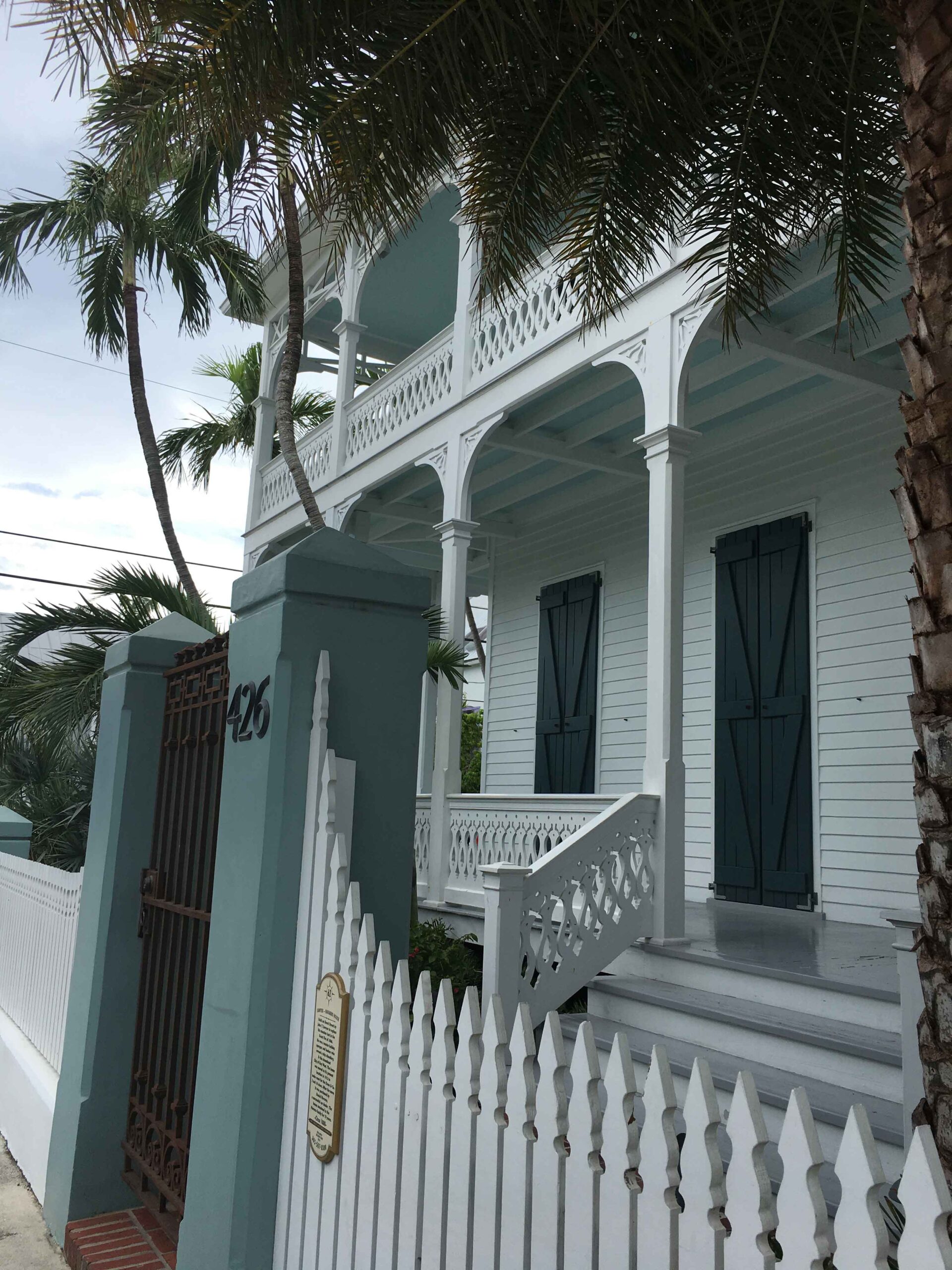
Today, the Sawyer-Navarro House sits at 426 Elizabeth Street, between Fleming and Eaton Streets. But when it was built around 1888, this beautiful two-and-a-half-story home stood at the corner of Duval and Fleming Streets. In 1912, as Duval Street became increasingly commercial, the house was moved to make way for a Kress & Company five-and-dime store.
And somehow, that isn’t even the most interesting part of the story.
Because the Sawyer-Navarro House connects us to the Great Fire of 1886, one of Key West’s most successful builders, the island’s sponge trade, steamships, early automobiles and two families who each left their mark on Key West.
So next time you’re wandering around Old Town, this is one historic house worth slowing down for.
Where Is the Sawyer-Navarro House?
Today, you’ll find the Sawyer-Navarro House at:
426 Elizabeth Street, Key West, Florida
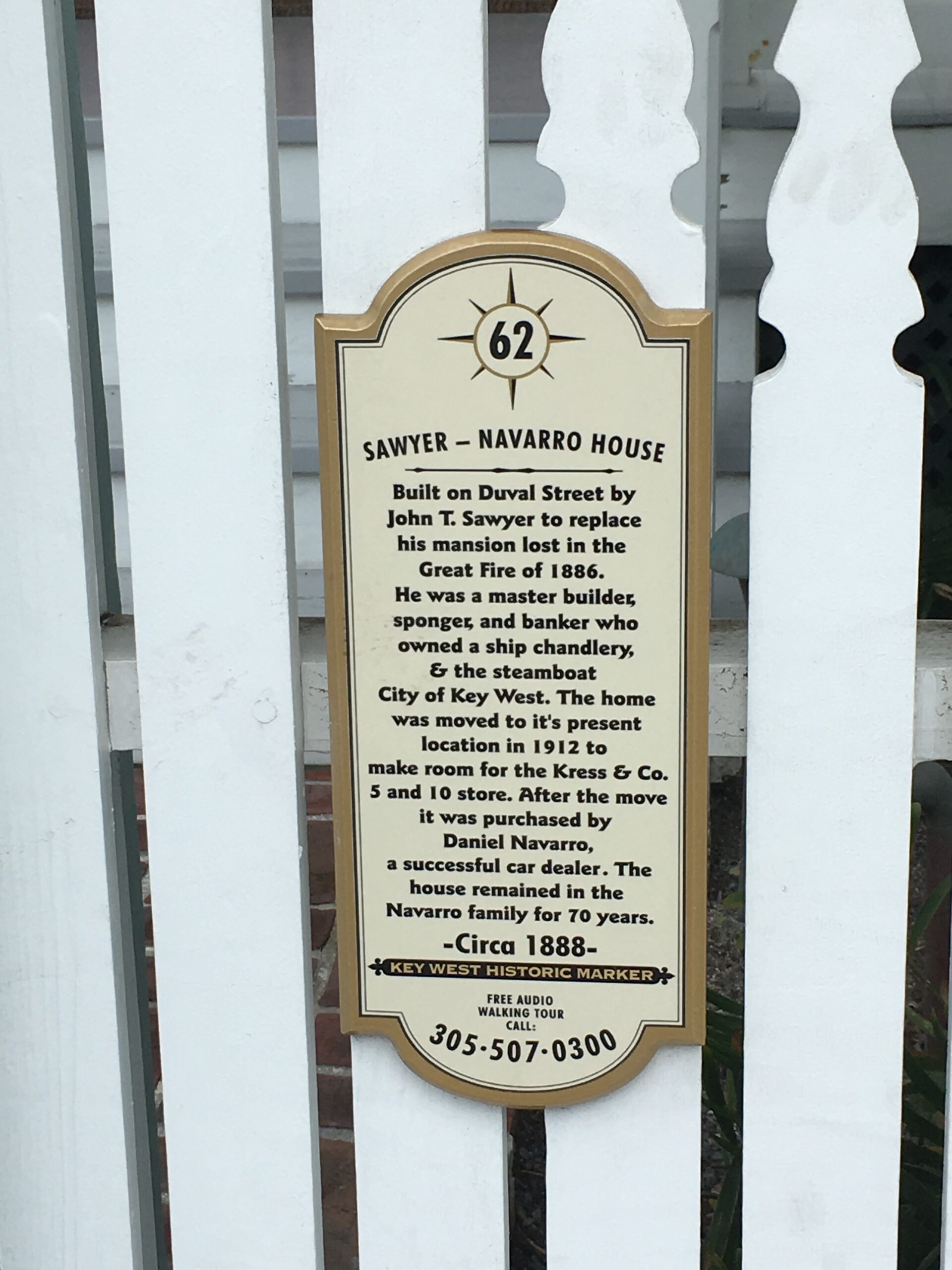
It sits near the corner of Elizabeth and Fleming Streets and is marked by Key West Historic Marker #62. The Key West Historic Marker tour identifies it as a circa-1888 home that was relocated to Elizabeth Street in 1912.
From the street, it’s easy to see why the house stands out.
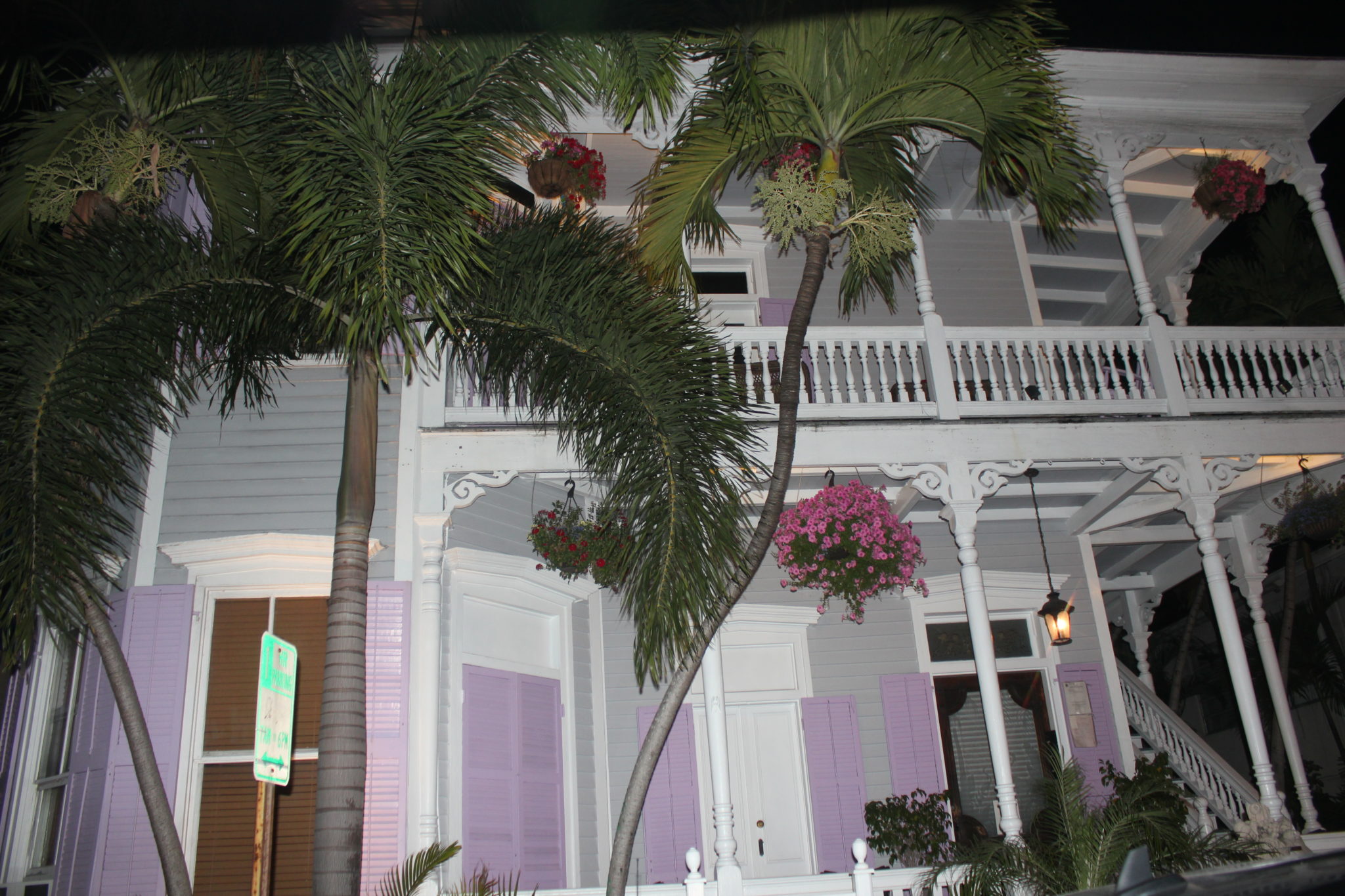
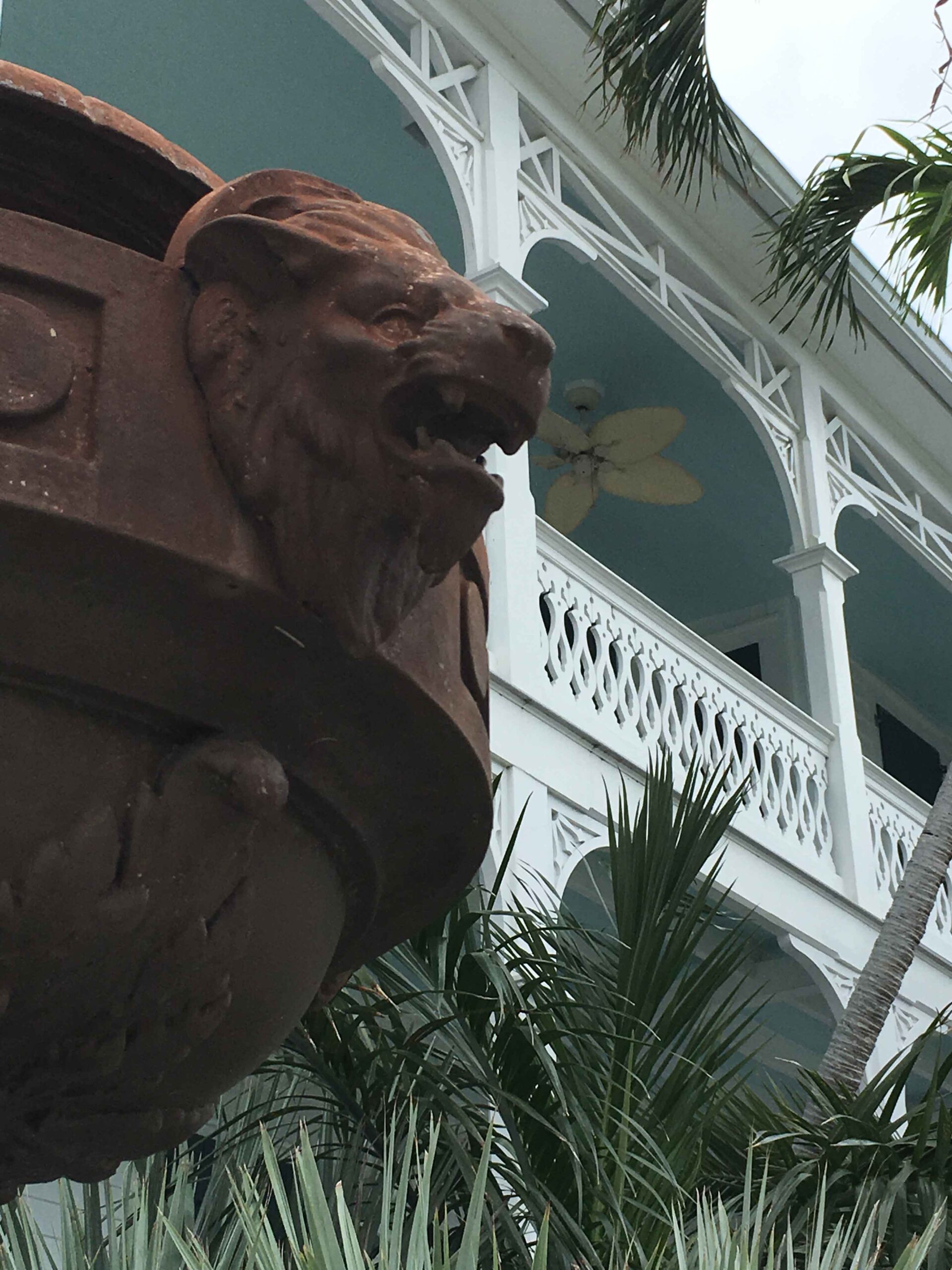
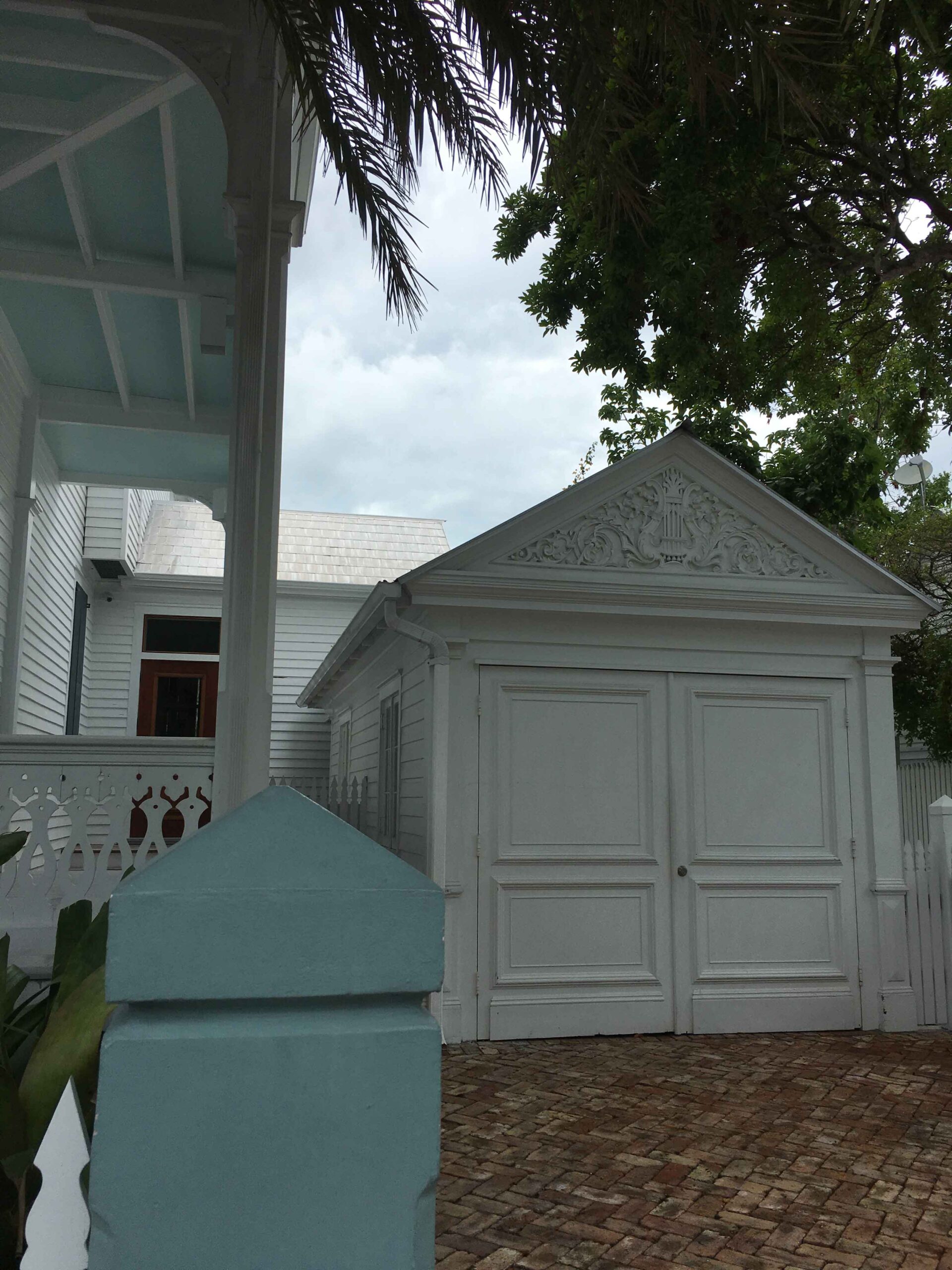
The home is a large, two-and-a-half-story structure with a Classic Revival influence, beautiful symmetry and intricate decorative fretwork.
Basically, this was not somebody’s modest little island cottage.
This house was meant to make a statement.
And so was the man who built it.
Meet John T. Sawyer
John T. Sawyer is one of those Key West characters whose résumé makes you wonder when he actually slept.
He was born in the Bahamas in 1853 while his family was emigrating from Ireland toward the southern United States.
By 1872, Sawyer had made his way to Key West and began working as a journeyman carpenter.
That sounds fairly ordinary.
What happened next was not.
Within about 16 years, Sawyer had become known as one of Key West’s leading builders and businessmen.
He was a master builder.
A merchant.
A sponger.
A banker.
He owned a ship chandlery, which supplied ships with equipment and provisions.
He served as a city commissioner.
And because apparently that wasn’t enough, he also owned the steamboat City of Key West and operated steamship service between Key West and Baltimore.
John Sawyer did not believe in staying in one lane.
The First Sawyer Mansion Was Lost in the Great Fire of 1886
Sawyer’s first grand home stood at the corner of Duval and Fleming Streets.
Then came one of the most devastating events in Key West history.
On April 7, 1886, a massive fire swept through the heart of town. It burned for approximately 12 hours and destroyed a huge portion of Key West’s commercial district.
Sawyer’s mansion was among the buildings lost.
But he didn’t leave the property.
He rebuilt.
Around 1888, a new Sawyer home rose on the same Duval Street site.
That is the house we know today as the Sawyer-Navarro House.
And if John Sawyer’s name sounds familiar, there’s a reason.
He is also associated with the construction of the Richard Kemp House, today known as Ridley House. Apparently if you wanted an impressive house built in Key West in the late 1800s, Sawyer was a pretty good person to know.
Then Key West Did Something Very Key West
Fast-forward to 1912.
Duval Street was changing.
Homes that had once occupied valuable downtown property were increasingly giving way to businesses and commercial buildings.
Sawyer eventually sold the property at Duval and Fleming.
There was just one problem.
His enormous house was still sitting on it.
Today, we might expect a demolition crew to arrive.
Key West had another solution.
Move the house.
Yes. The entire thing.
The Sawyer home was relocated from Duval Street to its current location on Elizabeth Street in 1912, clearing the original site for a Kress & Company five-and-dime store.
And this wasn’t completely unusual in old Key West.
Buildings represented valuable lumber, craftsmanship and materials that weren’t always easy or cheap to replace on an island. Moving a perfectly good structure could make much more sense than tearing it down.
Still…
Imagine casually walking through Key West and seeing a giant mansion coming down the street.
Forget chickens crossing the road.
There’s a house coming.
From Sawyer to Navarro
Once the house settled into its new Elizabeth Street address, another important Key West family entered the story.
Shortly after the move, Daniel and Eva Navarro purchased the home.
And I love this part because the two families almost represent two different eras of Key West.
John Sawyer made his mark during an age dominated by ships, sponges, trade and the working waterfront.
Daniel Navarro built his success around something much newer.
Cars.
Navarro began in the automobile business with a garage and later became an owner of Gato & Navarro, Incorporated, a car dealership and automotive repair company.
By 1928, the business was firmly established.
So one historic house went from belonging to a man whose world revolved around ships…
to a man whose world revolved around automobiles.
That’s a pretty incredible snapshot of how quickly Key West itself was changing.
The Navarro family kept the house for approximately 70 years, which is why the property carries both family names today.
Why the Sawyer-Navarro House Matters
What I love about the Sawyer-Navarro House is that you don’t have to be an architecture buff to appreciate it.
Yes, the house is beautiful.
Yes, the craftsmanship and fretwork are worth noticing.
But the really interesting story is everything that happened around it.
The first house on the site was destroyed by fire.
The replacement was built by one of Key West’s most accomplished builders.
Then Duval Street changed.
Instead of demolishing the house, they moved it.
A new family moved in.
Ships slowly gave way to automobiles.
Key West continued evolving.
And the house stayed part of the story.
Just at a different address.
A Fun Key West Walk
Here’s something I think would be fun to do on your next trip.
Start near the intersection of Duval and Fleming Streets.
Look around and imagine John Sawyer’s grand home sitting there more than a century ago.
Then walk over to 426 Elizabeth Street.
There it is.
Same house.
Different street.
The official Key West Historic Marker map even includes the Sawyer-Navarro House on its Architectural Heritage Trail and specifically identifies it as the “moved” house.
That’s one of my favorite things about Key West history.
You can actually walk the story.
Look for Historic Marker #62
When you reach the house, look for Historic Marker #62.
The marker summarizes the Sawyer-Navarro story, including John Sawyer’s career, the Great Fire, the 1912 move and the Navarro family’s long ownership of the property.
And while you’re there, take a minute to look beyond the marker.
Notice the porches.
The symmetry.
The decorative details.
Then imagine moving all of it several blocks through Key West in 1912.
That part still gets me.
One House, Two Families and a Changing Key West
The Sawyer-Navarro House isn’t just a beautiful old Key West home.
It’s a little timeline sitting on Elizabeth Street.
John Sawyer represents an island built around ships, sponging, commerce and the waterfront.
Daniel Navarro represents a Key West stepping into the age of automobiles.
And the house itself represents something Key West has always done remarkably well:
adapt.
Buildings change.
Businesses change.
Neighborhoods change.
People come and go.
And somehow, little pieces of the old island keep surviving.
Sometimes they even survive by getting picked up…
and moved down the street.
So the next time you’re wandering through Old Town and find yourself near 426 Elizabeth Street, stop for a minute.
Look at the Sawyer-Navarro House.
Then ask yourself:
How in the world did they move that entire thing?
Because that is exactly the kind of wonderfully strange Key West rabbit hole I love.
Explore Another Side of Key West
Want to keep digging into Key West’s past after dark?
Check out Haunted Key West, the sponsor of this episode. Their tours explore some of the island’s stranger stories, haunted places and colorful history.
Learn more: https://funinkeywest.com/Ghost