Did you know one of the most important places in Cuba’s fight for independence is sitting right in the middle of Duval Street?


Yep.
Right there among the shops, bars, galleries and places serving frozen drinks is the San Carlos Institute, a building with a story that stretches far beyond Key West.
You’ll find it at 516 Duval Street, and if you’ve walked this stretch of Old Town before, there’s a very good chance you’ve passed it without realizing exactly what happened inside.
That’s the fun thing about Key West.
You can be wandering along thinking about where you’re having lunch…
and suddenly you’re standing in front of a place where Cuban exiles organized for independence, José Martí addressed huge crowds, children were being taught in both English and Spanish, and generations of Key West’s Cuban community gathered to preserve their culture.
So this is one of those places where I highly recommend slowing down.
Because the San Carlos Institute is much more than another beautiful historic building on Duval Street.
Where Is the San Carlos Institute?
The San Carlos Institute is located at:
516 Duval Street
Key West, Florida
It sits between Fleming and Southard Streets in the heart of Old Town.
Look for the beautiful building with its arches and balcony overlooking Duval.
You’ll also find Key West Historic Marker #63 here.
And here’s the best part for anyone who has spent a lot of time admiring Key West buildings from the sidewalk:
You can go inside.
The San Carlos currently welcomes visitors every day from 12 PM to 6 PM, and admission is free. Hours can always change, so I recommend checking before your trip.
But the San Carlos Didn’t Start on Duval Street
Here’s your first…
Did you know?
The San Carlos Institute dates all the way back to 1871.
And its first home wasn’t on Duval Street.
It opened in a small wooden building on Anne Street.
Cuban exiles living in Key West wanted a place where they could educate their children, preserve Cuban culture and support the growing movement for Cuba’s independence from Spain.
Community leaders José Dolores Poyo and Juan María Reyes helped establish the organization, which was named for Cuba’s Seminario San Carlos, a respected center of education.
But one of my favorite details about the early San Carlos isn’t about a famous political leader.
It’s about the people who paid for it.
Key West Cigar Workers Helped Build This Place
At the time, Key West had a thriving Cuban cigar industry.
Thousands of Cuban immigrants lived and worked on the island, and the San Carlos became an important part of their community.
Many of the Institute’s supporters were tobacco workers who donated part of their wages to keep it going.
Think about that for a minute.
These weren’t wealthy donors writing giant checks.
They were working people who believed strongly enough in education, Cuban culture and independence that they regularly gave part of what they earned.
That tells you a lot about how important the San Carlos was to Key West’s Cuban community.
One of America’s Earliest Bilingual and Integrated Schools
The San Carlos wasn’t only a political gathering place.
It was also a school.
And this part of its story really deserves more attention.
Classes were taught in both English and Spanish, and children of different races attended together.
That made the San Carlos one of the earliest bilingual and integrated schools in the United States.
And we’re talking about the 1870s.
In Florida.
That’s pretty remarkable.
Education and preserving Cuban culture were central to the San Carlos from its earliest days.
So while adults were discussing politics and independence, children were learning downstairs in two languages.
Then José Martí Arrived in Key West
If you spend much time learning about Key West’s Cuban history, one name will keep appearing:
José Martí.
Martí was a Cuban poet, writer, political thinker and revolutionary leader who became one of the central figures in Cuba’s independence movement.
And Key West became extremely important to his work.
When Martí came to the island, the Cuban exile community was passionate about independence…
but it wasn’t necessarily united.
Different groups had different leaders and different ideas.
Martí began meeting with members of the community and trying to bring those groups together.
And the San Carlos became one of the central gathering places.
On January 3, 1892, Martí addressed a large crowd at the Institute and helped rally the community around a united effort for Cuban independence.
That work contributed to the establishment of the Cuban Revolutionary Party, which helped organize the independence movement.
Another Did You Know?
Martí loved the San Carlos so much that he called it:
“La Casa Cuba.”
The House of Cuba.
That gives you an idea of just how important this building became.
Cuba’s Fight for Independence Was Being Organized in Key West
This is the part that changes the way I look at Duval Street.
When we think about Cuba’s fight for independence from Spain, it’s easy to picture events happening somewhere far away.
But Key West was part of that story.
Cuban cigar workers were raising money here.
Political leaders were organizing here.
Meetings were taking place here.
José Martí was speaking here.
The San Carlos Institute became so important to the movement that today the organization describes it as the cradle of Cuba’s independence movement.
All of this was happening on the same island where you’re now deciding between key lime pie and another margarita.
Key West contains multitudes.
And Then Cuba Became Independent
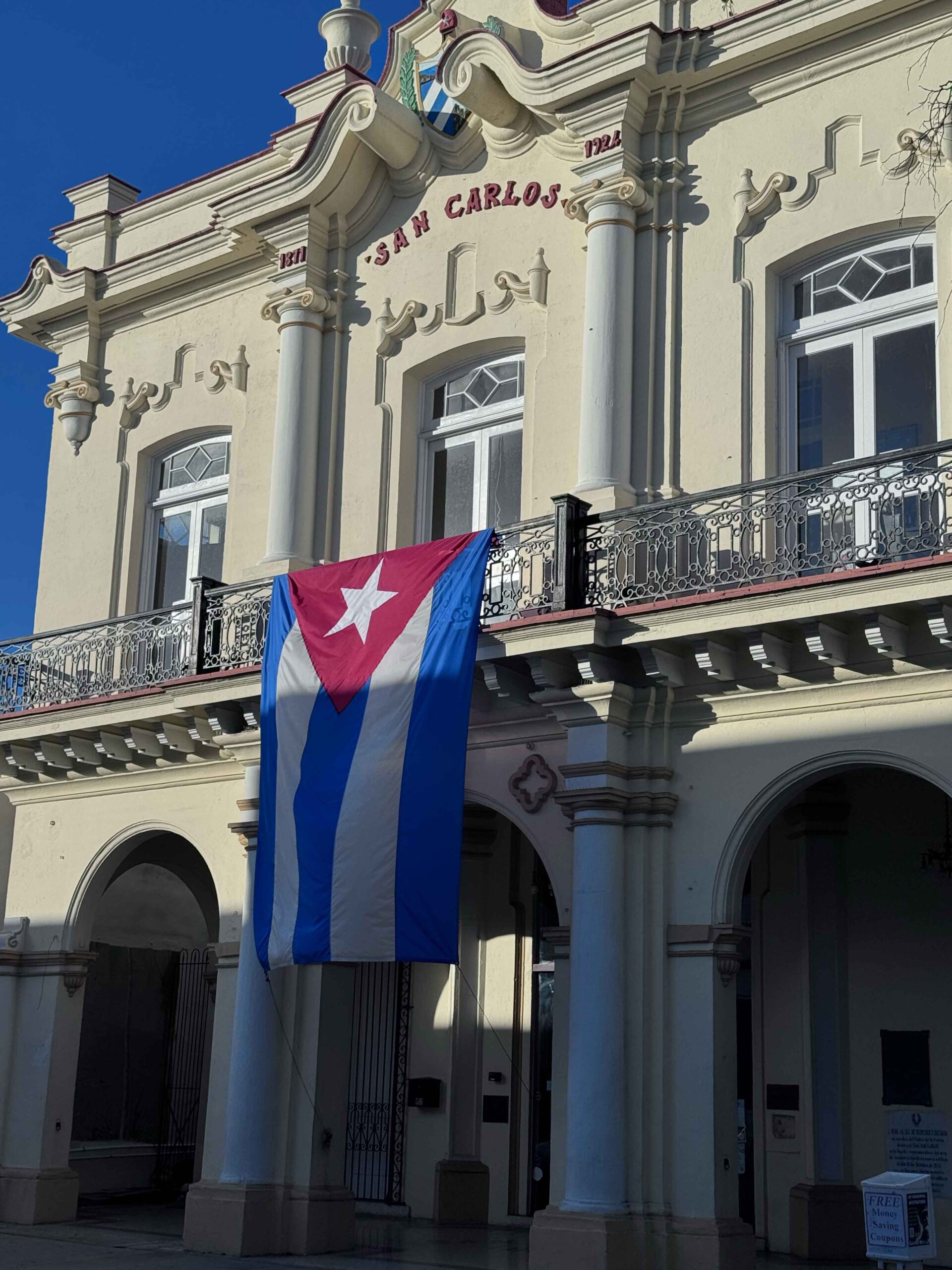
On May 20, 1902, members of Key West’s Cuban community gathered at the San Carlos to celebrate Cuba’s independence.
Imagine that moment.
Some of the people celebrating had spent decades supporting the cause.
Workers had donated part of their paychecks.
Families had helped preserve Cuban culture in exile.
Political leaders had gathered and organized.
Martí had spoken there.
And now they were celebrating the moment they had worked toward for years.
But if you think that gives us a neat ending to the San Carlos story…
not even close.
Because this building has basically spent its entire existence refusing to disappear.
The San Carlos Has Had More Than One Life
Here’s another reason I find this place so fascinating.
It has survived an incredible amount.
The San Carlos moved to a larger building on Fleming Street in 1884.
Then came the Great Fire of 1886.
That fire destroyed a huge section of Key West, including the San Carlos.
So they rebuilt.
In 1890, the Institute moved to its present Duval Street location.
Then in 1919, a hurricane severely damaged the building.
So…
they rebuilt again.
See the pattern here?
Cuba Helped Rebuild the San Carlos
After the 1919 hurricane, San Carlos leaders sought help rebuilding.
And here’s another one of my favorite…
Did you know?
The Republic of Cuba contributed $80,000 toward construction of a new San Carlos building.
Prominent Cuban architect Francisco Centurión designed the building that stands on Duval Street today.
It opened in 1924.
And this wasn’t simply replacing what had been there before.
The architecture intentionally incorporated Cuban influences, including:
- High ceilings
- Graceful arches
- Marble stairways
- Louvered windows
- Handcrafted mosaics
- Checkered Cuban tile
The result became known as the “Jewel of Key West.”
Once you’re inside, make sure you actually stop and look at the building itself.
Sometimes we get so focused on exhibits and historical information that we forget the structure is part of the story too.
Then the San Carlos Nearly Disappeared
For decades, the school continued operating and serving Key West’s Cuban community.
But after the Cuban Revolution in 1959, financial support from the Cuban government ended.
Maintaining the aging building became increasingly difficult.
Eventually, structural problems became so serious that the school closed in 1973, and the building was condemned.
It remained closed for almost two decades.
During those years, books and records were damaged or lost.
The building continued deteriorating.
Then in 1981, part of the façade collapsed and injured a tourist walking past.
At that point, demolition became a very real possibility.
Some people wanted the San Carlos torn down.
Others wanted the property redeveloped commercially.
And once again…
people who cared about this place stepped in.
The Community Saved It Again
Cuban residents in Key West and Miami fought to preserve the San Carlos as a historic and cultural landmark.
Fundraising began.
Preservation efforts grew.
Architects, builders, artisans and community leaders contributed their skills to the restoration.
And after years of work, the San Carlos finally reopened in January 1992.
Which brings us right back to the theme running through this entire story.
Every time it looked like the San Carlos was finished…
someone decided it was worth saving.
What Is the San Carlos Institute Today?
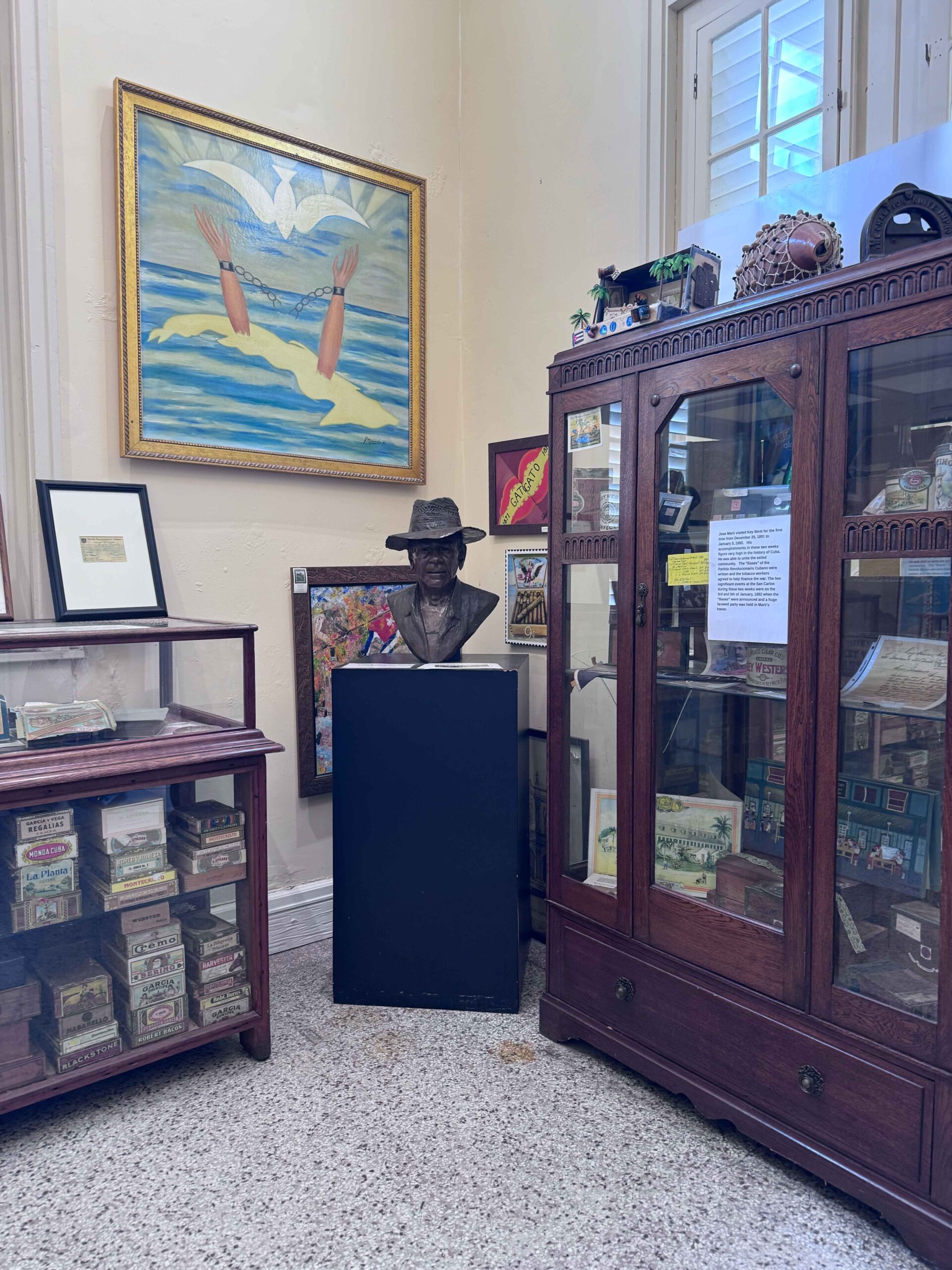
Today, the restored San Carlos serves several roles.
It’s a museum.
A library.
An art gallery.
A theater.
An educational space.
And, most importantly, it remains a place dedicated to preserving and sharing Cuban heritage.
And because admission is currently free, this is one of those wonderfully easy additions to a Key West itinerary.
You’re already on Duval Street.
Just go inside.
What to Look for When You Visit
Don’t rush through.
Take a few minutes to notice the architecture.
Look at the arches.
The tile.
The stairways.
The details in the building.
Explore the exhibits and think about the people who gathered here.
And then step back outside onto Duval Street.
Because that contrast is part of what makes the San Carlos so interesting.
You walk out of a place tied directly to Cuban independence…
and immediately you’re back in modern Key West.
Music.
Tourists.
Restaurants.
Bars.
Scooters.
Roosters wandering around like they own the place.
Two very different Key Wests sitting right beside each other.
A Great Stop If You Love Hidden Key West History
The San Carlos Institute is exactly the kind of place I love finding in Key West.
You don’t have to schedule half a day around it.
You don’t need to know everything about Cuban history before you walk through the door.
You simply need to be curious.
Stop in.
Look around.
Read a few things.
Ask yourself what Duval Street must have looked like when Cuban cigar workers were heading to meetings here and José Martí was speaking to the exile community.
And then keep wandering.
That’s one of my favorite ways to explore Key West.
Not checking attractions off a list.
But slowly collecting stories.
Want to Explore Key West History Through Its Food?
Another fun way to learn more about Key West’s different cultures and neighborhoods is through Key West Food Tours.
Their tours combine food with the stories behind the island, so you’re learning more about Key West while also eating your way around town.
I consider that very efficient sightseeing.
You can learn more here:
funinkeywest.com/Foodtour
Disclosure: I may earn a commission if you book through my link, at no additional cost to you.
Before You Walk Past…
The next time you’re on Duval Street, keep an eye out for 516 Duval Street.
Remember that Cuban cigar workers helped support this place.
Children were learning here in both English and Spanish.
José Martí stood here helping unite a community behind Cuban independence.
People celebrated Cuba’s independence here.
The San Carlos burned.
It rebuilt.
A hurricane damaged it.
It rebuilt.
It was condemned.
It nearly disappeared.
And once again…
people saved it.
That’s a lot of history hiding behind one beautiful white façade.
So don’t just walk past.
Step inside.
Because sometimes the best Key West stories aren’t hiding down some mysterious alley.
Sometimes they’re sitting right there…
in the middle of Duval Street.
San Carlos Institute Quick Facts
Address: 516 Duval Street, Key West
Historic Marker: #63
Founded: 1871
Current building: Opened in 1924
Known for: Cuban heritage, José Martí, Cuban independence movement, early bilingual and integrated education
Current visiting hours: Daily, 12 PM–6 PM
Admission: Free
Best for: History lovers, architecture fans, Cuban heritage, first-time and repeat Key West visitors