You can walk past some pretty incredible houses in Key West without ever knowing the stories hiding behind their front doors.
The Artist House at 534 Eaton Street is definitely one of those places.
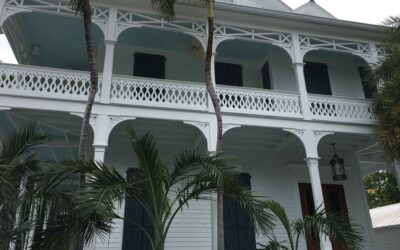
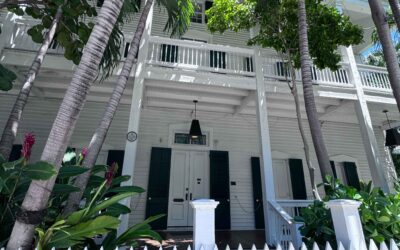
With its verandas, decorative gingerbread and unmistakable turret, this beautiful historic home is hard to miss. But the Artist House is much more than a pretty piece of Key West architecture.
It was home to an accomplished Key West artist and his concert pianist wife.
It has been connected to ghost stories for decades.
And, perhaps most famously, it was once home to Robert the Doll.
Yes. That Robert the Doll.
But before we get to Robert, because you know we have to, there is a lot more to the story of the Artist House.
The History of the Artist House
The Artist House was built sometime between 1890 and 1898 for Thomas Otto and his wife, both native Key Westers.
The Otto family formally moved into the grand home on Eaton Street in 1898.
Their youngest son, Robert Eugene Otto, would eventually inherit the house.
Everyone called him Gene.
And Gene grew up to become an accomplished artist.
He studied at the Academy of Fine Arts in Chicago and later at the Art Students League in New York before traveling to Europe to continue developing his art.
While painting and studying in Paris, Gene met Annette Parker, better known as Anne, a Boston native who was studying music.
They married in Paris on May 3, 1930.
That already sounds like the beginning of a movie, doesn’t it?
Gene and Anne Otto
After Anne completed her studies in Paris, the couple moved to New York for several years.
Anne was an accomplished concert and jazz pianist and performed at the famous Rainbow Room at Rockefeller Center.
Eventually, Gene and Anne returned to Key West and made the house on Eaton Street their home.
They would live there for roughly the next four decades.
Gene continued his work as an artist, and over time the property became known as the Artist House.
Gene died in 1974. Anne died two years later in 1976.
Their creative lives are still very much tied to the story and identity of this beautiful Key West home.
Take a Look at the House
Even if you knew absolutely nothing about its history, the Artist House would still be worth stopping to see.
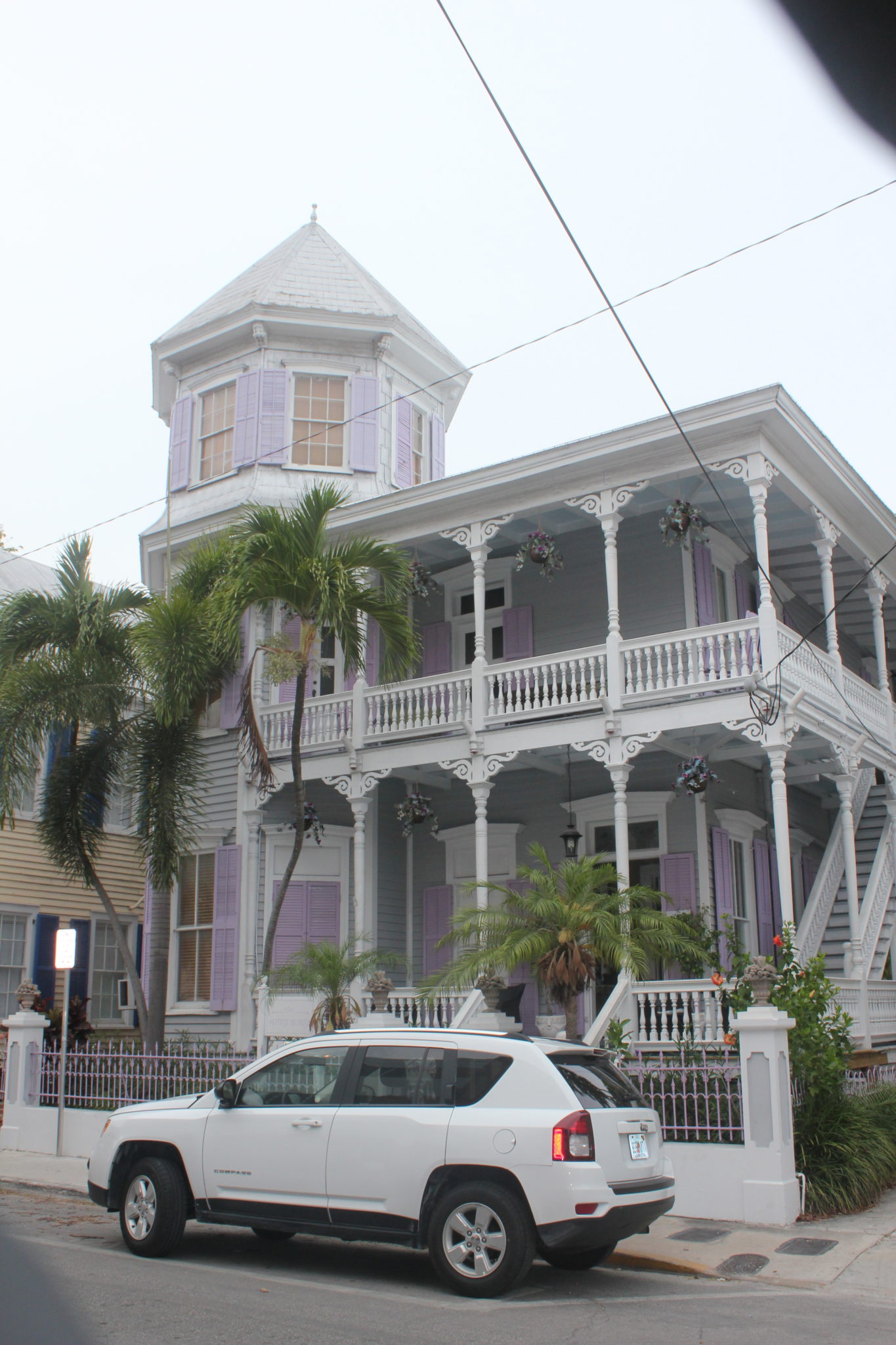
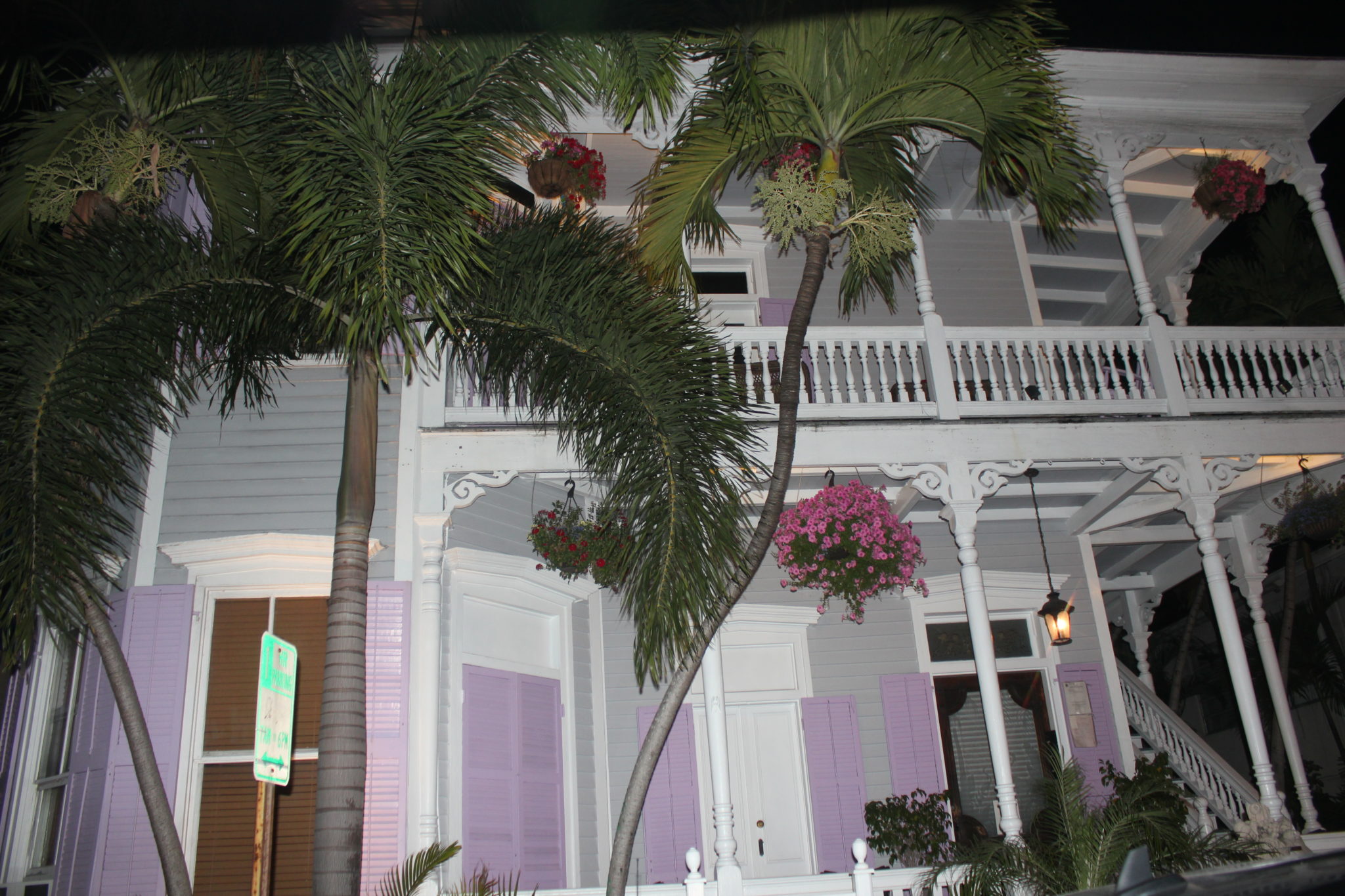
The restored Victorian home is described as a Colonial Queen Anne-style house and features graceful columns, verandas, decorative gingerbread and one very noticeable turret.
Inside, you’ll find soaring 12-foot ceilings, original woodwork and many of the architectural details that give historic Key West homes so much personality.
And that turret?
We’re going to come back to that.
The Artist House says it is one of the most photographed homes in Key West, perhaps second only to the Hemingway House.
Once you see it, you’ll understand why.
So Where Does Robert the Doll Come In?
Now we get to the part of the story most people know.
Robert the Doll belonged to Gene Otto when he was a child.
Robert is a handmade doll dating to around the turn of the 20th century. He stands about 40 inches tall and is stuffed with wood wool called excelsior.
His unusual size and appearance are certainly part of what has made him such a memorable figure in Key West history.
Gene’s full name was Robert Eugene Otto.
Interestingly, it was the doll who became known as Robert, while the boy went by Gene.
The two became inseparable.
And this is where documented history starts getting tangled up with Key West legend.
Where Did Robert the Doll Come From?
This is one of those stories where you’ll find several different answers depending on where you look.
One popular Key West legend says Robert was given to Gene around 1904 by a young girl or household servant of Bahamian descent. Some versions of the story go even further and claim the doll was given to Gene in retaliation for some wrongdoing and that voodoo was involved.
It makes for a wonderfully creepy story.
But there’s a problem.
Not everyone agrees that’s actually how Robert came into Gene’s life.
Research reported by Atlas Obscura says Gene’s grandfather purchased the doll during a trip to Germany and gave it to Gene as a childhood gift.
The Steiff Company of Germany has also been connected to Robert. According to research into the doll’s origins, Robert may not originally have been intended as a child’s toy at all. He may have been created as part of a store-window display of clowns or jesters.
So which story is true?
That’s not entirely clear.
And honestly, that’s part of what makes Robert so fascinating.
What we do know is that Robert became an important part of Gene’s life and remained with him well into adulthood.
Robert the Doll: History vs. Legend
One of the best-known Robert stories involves young Gene blaming his misbehavior on the doll.
Something would go wrong.
Gene would get in trouble.
And his explanation was supposedly:
“Robert did it.”
As Gene grew older, the stories surrounding Robert grew right along with him.
People said Robert’s facial expression changed.
Children walking past the Artist House reportedly claimed they saw him move from one side of an upstairs window to the other.
Visitors said they heard giggling.
Others reported that Robert appeared to move around rooms on his own.
Were these actual paranormal encounters?
An active imagination?
Or simply one of those Key West stories that gets a little better every time it is told?
I’ll let you decide.
Robert Had His Own Space in the Artist House
Robert wasn’t simply tucked away with Gene’s childhood belongings.
Gene kept him.
Even after Gene married Anne and returned to the Artist House, Robert remained part of the household.
Gene frequently painted in the turret area of the house because of the light, and Robert was reportedly positioned near the window.
Stories say Gene even created a special space for him with his own furniture and toys.
That meant people walking along Eaton Street could sometimes look up and see Robert staring down from the house.
Imagine not knowing the story and catching that out of the corner of your eye.
Gene Had Another Connection to Fort East Martello
Here’s one of my favorite twists in this story.
Gene Otto actually had a connection to Fort East Martello Museum long before Robert ended up there.
Gene designed a gallery at Fort East Martello and had even envisioned turning his own Artist House into a museum someday.
That plan never happened.
But decades later, Robert would end up at the very museum Gene had helped shape.
Key West history has a funny way of tying up its loose ends.
What Happened to Robert After Gene Died?
After Gene died in 1974, Myrtle Reuter purchased the Otto home.
Robert came with quite a story by then.
Myrtle became Robert’s next companion and kept him even after she moved from the Artist House about six years later.
And according to Myrtle, Robert’s unusual behavior didn’t stop when he left Eaton Street.
She claimed that he moved around her house on his own.
In 1994, Myrtle donated Robert to the Key West Art & Historical Society, and he became part of the collection at Fort East Martello Museum.
But moving into a museum certainly didn’t quiet Robert’s reputation.
If anything, it made him even more famous.
Where Can You See Robert the Doll Today?
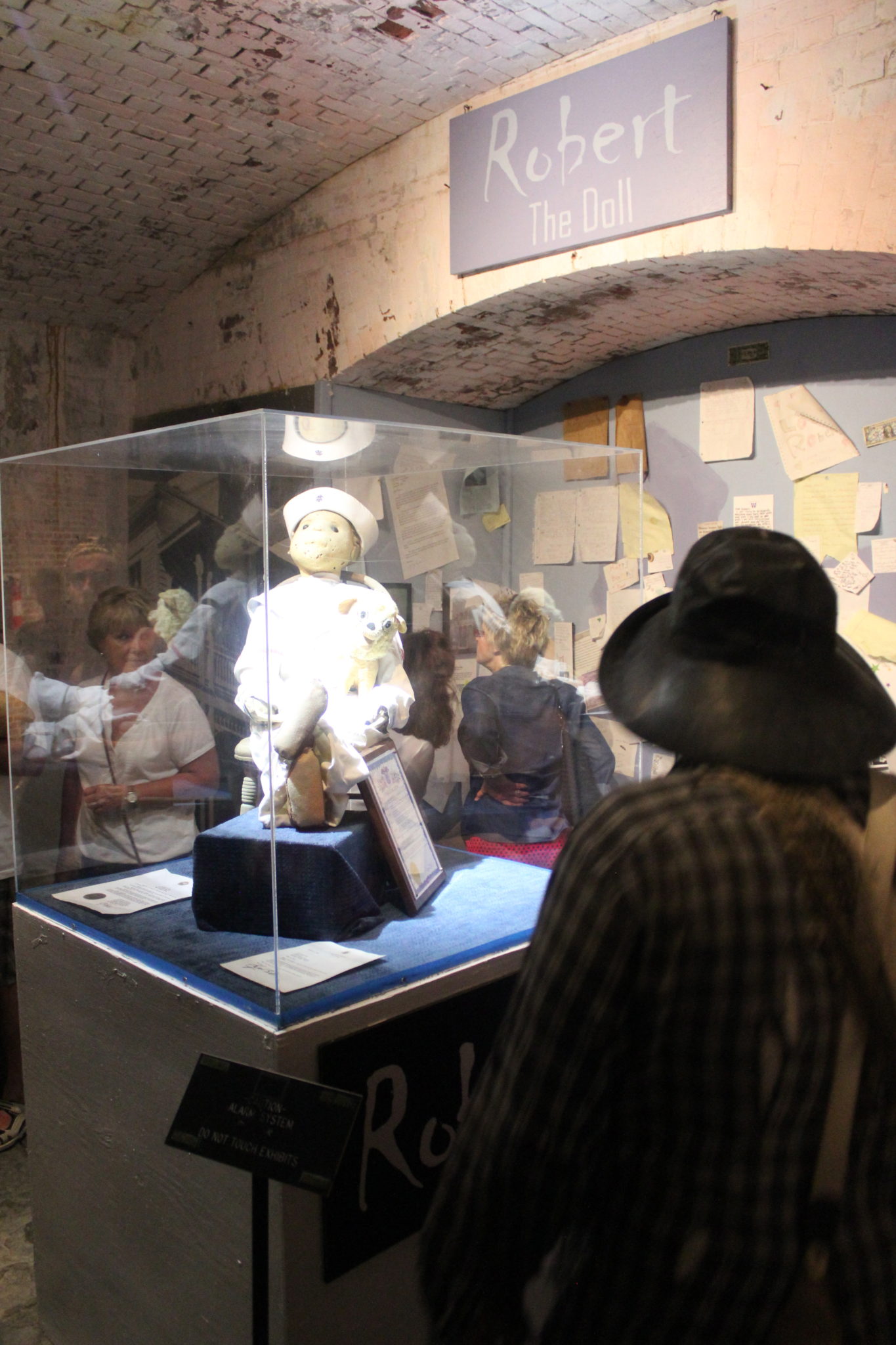
Today, Robert is on display at Fort East Martello Museum, near Key West International Airport.
And he still attracts visitors from around the world.
People have reported cameras and electronic devices malfunctioning around his display.
Visitors sometimes blame Robert for bad luck that happens after their trip.
And that’s how one of Robert’s strangest traditions began.
The apology letters.
People write to Robert asking forgiveness.
Some apologize for making fun of him.
Others say they took his picture without permission.
And some simply explain the string of unfortunate things that happened after they left Key West and ask Robert to please call things even.
Those letters continue to arrive at the museum.
Who Takes Care of Robert Today?
Being a century-old museum artifact requires a little more care than simply sitting inside a glass case.
According to an interview with Atlas Obscura, Key West Art & Historical Society curator Cori Convertito has served as one of Robert’s modern-day caretakers.
And apparently, caring for Robert comes with some rather unusual job duties.
Once a year, Robert is removed from his protective display case for a conservation check.
He is weighed and examined to make sure Key West’s humidity and environment aren’t damaging his excelsior-filled body.
His display case helps protect him from humidity and ultraviolet light.
But physical conservation isn’t the only part of the job.
Robert continues to receive letters and emails from people around the world.
His caretaker has helped read and manage those communications and even Robert’s social media presence.
According to Convertito, the museum has received thousands of letters connected to Robert over the years.
So yes.
Robert the Doll has his own mail.
He gets emails.
He has social media.
And he gets an annual checkup.
Only in Key West.
Should You Ask Robert Before Taking His Picture?
Here’s another part of the Robert legend you’ll hear when you visit.
According to tradition, you should ask Robert’s permission before taking his photograph.
Visitors who don’t follow that rule supposedly risk angering him.
And some of those apology letters at the museum come from people who believe exactly that happened.
Do you have to ask?
Well…
I’ll leave that entirely up to you.
Personally, I don’t think it ever hurts to be polite.
Especially to a doll with his own incoming mail department.
Is the Artist House Haunted?
Robert isn’t the only ghost story connected to the Artist House.
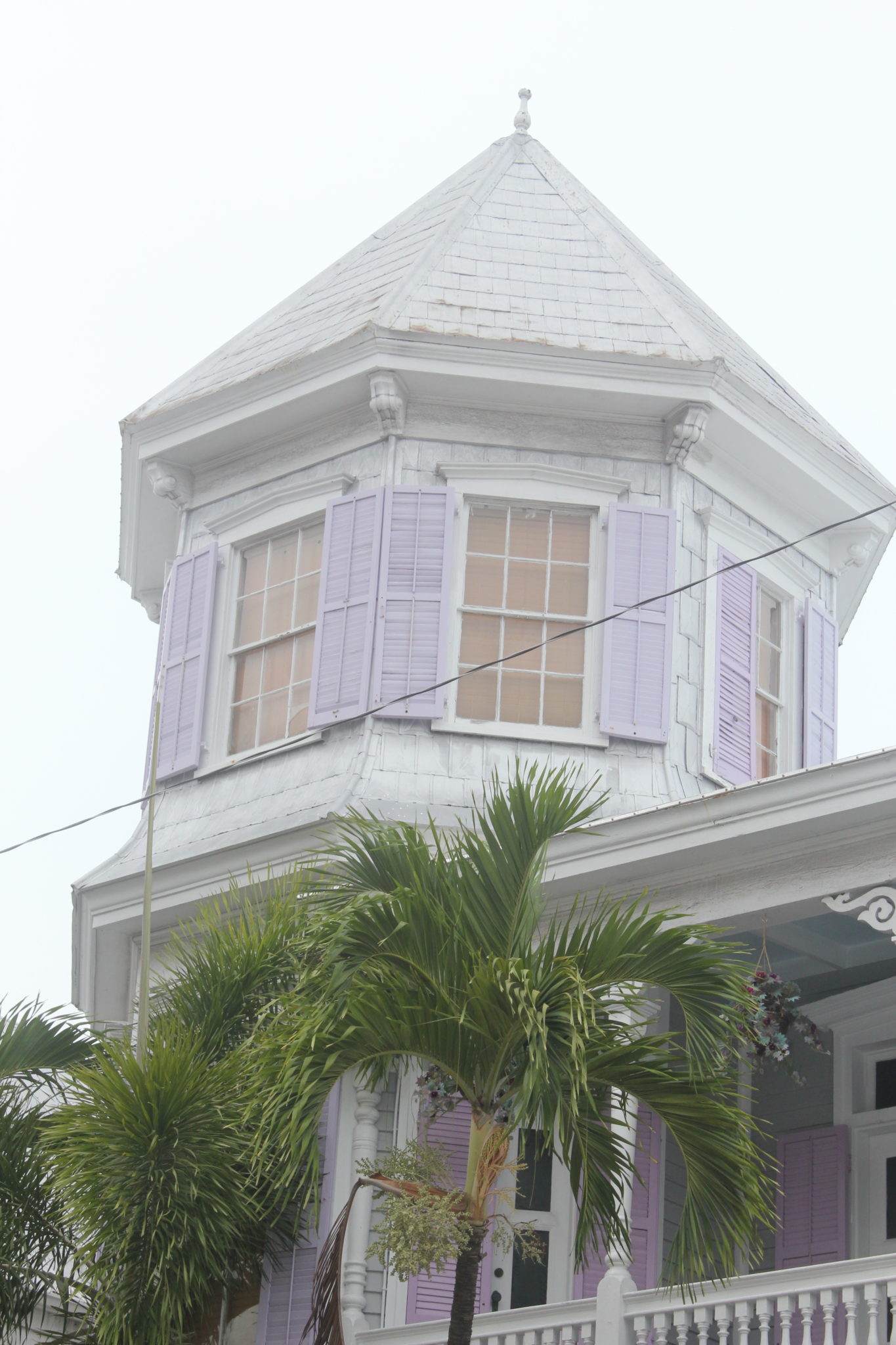
Anne Otto has her own.
Over the years, stories have circulated about guests seeing the figure of a woman believed to be Anne inside the house.
One of the best-known stories involves the Turret Suite.
According to the Artist House, Anne has reportedly been seen descending the staircase in the turret wearing her wedding dress.
The property itself is careful to point out that it can’t vouch for all the stories that have been told about the house.
And I actually like that.
Because that’s part of the fun with Key West ghost stories.
Some parts are documented history.
Some are folklore.
And somewhere in the middle is usually a really good story.
Can You Stay at the Artist House?
Yes!
And this might be one of my favorite parts of the story.
The Artist House isn’t simply a historic home you walk past on a tour.
It has operated as a guest house since 1978 and describes itself as one of the oldest continually operating guest houses in Key West.
You can actually stay inside this historic home.
There is even a Turret Suite.
So if sleeping in one of Key West’s most talked-about historic houses sounds like your kind of vacation, you can absolutely do it.
Whether Anne decides to make an appearance is apparently not included in the room rate.
Where Is the Artist House?
The Artist House is located at:
534 Eaton Street
Key West, Florida
It’s in the heart of Old Town, just a short walk from Duval Street, the Historic Seaport and many of Key West’s most popular attractions.
Even if you aren’t staying there, it’s worth walking by just to admire the architecture.
Look at the verandas.
Notice the gingerbread details.
And definitely look up at the turret.
Now that you know the story, you’ll probably look at those windows a little differently.
Where Is Robert the Doll?
If you actually want to meet Robert, you’ll need to head across the island to:
Fort East Martello Museum
3501 S. Roosevelt Boulevard
Key West, Florida
Robert is part of the permanent collection of the Key West Art & Historical Society.
And remember…
If you’re planning to take a picture, you might want to ask first.
Just in case.
One of Those Only-in-Key-West Stories
This is exactly what I love about exploring Key West.
You can start with a beautiful Victorian house on Eaton Street and suddenly find yourself talking about a Key West artist, a concert pianist who performed at Rockefeller Center, Paris in the 1930s, an old Civil War-era fort, ghost stories, thousands of apology letters and a century-old doll with his own social media accounts.
All because you stopped and wondered about one house.
So the next time you’re wandering around Old Town, don’t just walk past the Artist House.
Stop for a minute.
Take a look at the details.
And maybe glance up at the turret.
You never know who might be looking back.
Want to Discover More Hidden Key West?
Some of my favorite places in Key West are the ones you’ve probably walked past a dozen times without realizing how much history is hiding behind the front door.
That’s exactly what I love sharing here at Fun in Key West: the stories, hidden places and little pieces of the island that help you see Key West differently.
So keep exploring.
There’s always another story waiting around the next corner.